

What's Happening?
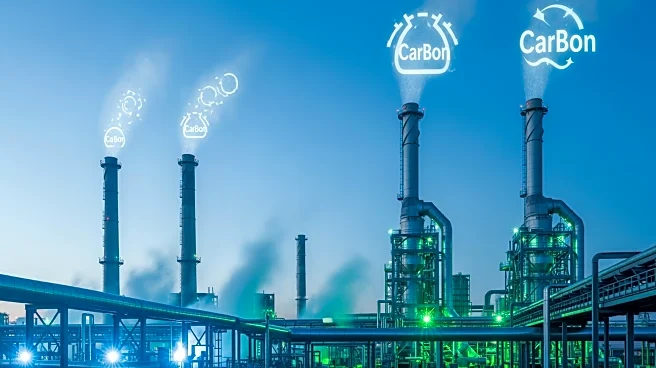
Prime Minister Narendra Modi has emphasized the role of carbon capture in revolutionizing India's steel industry. As part of India's commitment to achieving Net Zero emissions by 2070, the government is focusing on strategic investments and initiatives,
including the use of hydrogen, to enhance the sector's global competitiveness. The steel industry, a significant contributor to India's economic growth, is also a major source of greenhouse gas emissions, accounting for 10 to 12 percent of the country's total emissions. The government is implementing measures to transition towards cleaner steel production, including the introduction of a green steel taxonomy and the allocation of funds for green hydrogen use in steel production. These efforts aim to reduce emissions and promote the production of low-emission steel products.
Why It's Important?
The transformation of India's steel industry is crucial for both environmental and economic reasons. As the second-largest crude steel producer globally, India's steel sector is integral to its infrastructure development and employment generation. However, the industry's reliance on coal-based production methods poses significant environmental challenges. By adopting carbon capture and other clean technologies, India can reduce its carbon footprint and enhance the competitiveness of its steel products in a carbon-conscious global market. This shift is essential for meeting international climate commitments and ensuring sustainable industrial growth.
What's Next?
The Indian government is expected to continue its efforts to decarbonize the steel industry through policy interventions and technological advancements. The allocation of Rs 20,000 crore in the Union Budget for carbon capture technologies across various sectors, including steel, indicates a strong commitment to reducing emissions. The success of these initiatives will depend on the industry's ability to adopt and integrate new technologies, as well as the government's support in creating a conducive policy environment. The focus on green hydrogen and carbon capture utilization and storage (CCUS) technologies will likely play a pivotal role in achieving the desired emissions reductions.
Beyond the Headlines
The push for cleaner steel production in India highlights broader implications for global climate policy and industrial practices. As countries strive to meet climate targets, the adoption of carbon capture and green technologies in energy-intensive industries like steel could set a precedent for other sectors. This transition also raises questions about the economic viability and scalability of such technologies, as well as the need for international collaboration and support to achieve global emissions reductions. The success of India's initiatives could influence other emerging economies to adopt similar strategies, contributing to a more sustainable global industrial landscape.