





What's Happening?
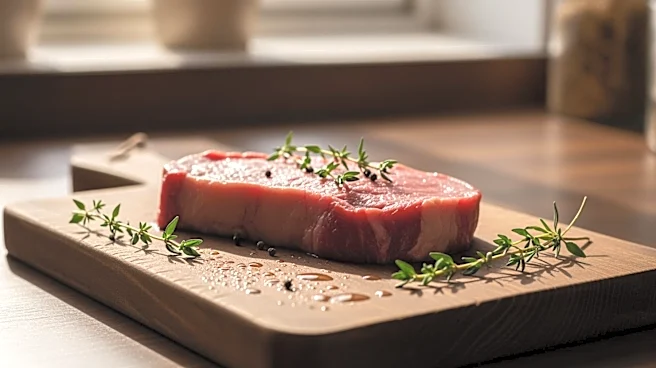
Researchers at Auburn University are questioning the accuracy of sell-by dates on meat packaging, suggesting that these dates may lead to unnecessary food waste. The study, which involved tracking microbial changes in ground beef over 14 days, aims to better
predict spoilage and extend the shelf life of meat products. The research indicates that discoloration in meat does not necessarily mean it is unsafe to eat, but rather a sign of quality degradation. This study is part of a broader effort to use data, microbiology, and artificial intelligence to transform food systems by predicting and preventing inefficiencies.
Why It's Important?
The implications of this research are significant for both economic and environmental reasons. By extending the shelf life of meat products, the beef industry could potentially recover hundreds of millions of dollars annually. This would also reduce the environmental burden associated with food waste, as beef production has a high environmental footprint. Additionally, reducing food waste could contribute to addressing food insecurity by making the food system more efficient. The research highlights a rare opportunity where profitability and sustainability can align, benefiting producers, retailers, and consumers alike.
What's Next?
Further research is needed to refine predictive spoilage modeling before it can be widely adopted by the meat industry. The goal is to create more accurate sell-by dates that reduce waste without compromising food safety. This will require rigorous food safety science and regulatory oversight to ensure consumer protection. If successful, this approach could be applied to other perishable food items, further enhancing the efficiency and sustainability of the food supply chain.