
What's Happening?
The Consumer Product Safety Commission (CPSC) has reported a significant increase in product recalls, with 357 recalls in fiscal year 2025 compared to 238 in 2020. Despite these efforts, dangerous products,
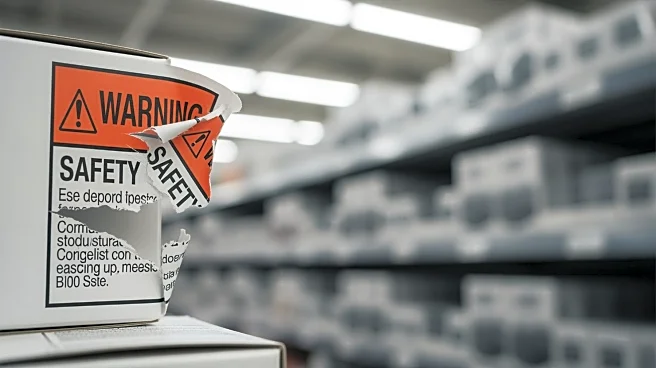
such as ByHeart powdered infant formula, have been found on store shelves even after recalls were issued. This issue was highlighted when cans of the recalled formula were discovered in major retailers like Kroger, Target, Albertsons, and Walmart. The FDA has initiated Operation Stork Speed to enhance testing for contaminants in baby formula. The CPSC and FDA conduct recall effectiveness checks, but challenges remain in ensuring all recalled products are removed from shelves.
Why It's Important?
The presence of recalled products on store shelves poses significant risks to consumer safety, particularly for vulnerable groups like infants. The increase in recalls indicates a growing concern over product safety standards and the effectiveness of current recall processes. Retailers and regulatory bodies face challenges in ensuring compliance and protecting consumers from potentially harmful products. The situation underscores the need for improved tracking and removal systems for recalled items, as well as enhanced regulatory oversight to prevent similar occurrences in the future.
What's Next?
Efforts to improve recall processes and product safety are expected to continue, with potential advancements in technology to aid in tracking and removing recalled products. The FDA's Operation Stork Speed aims to address safety concerns in baby formula, which may lead to stricter regulations and testing protocols. Retailers may also face increased scrutiny and pressure to enhance their internal recall procedures to prevent recalled products from reaching consumers.