
What's Happening?
Congressman Morgan Griffith of Virginia has emphasized the critical importance of strengthening American military readiness and technological progress, particularly in the realm of drone technology. In
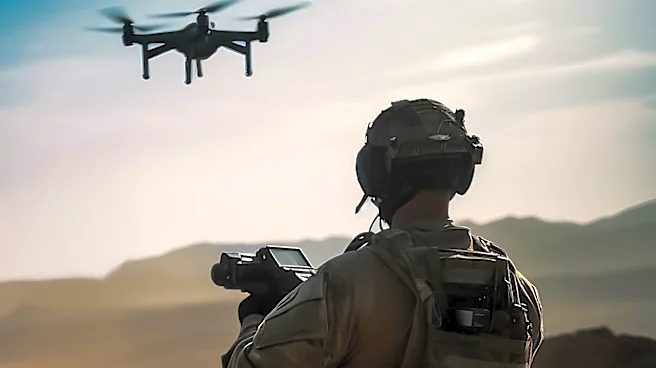
his weekly e-newsletter, Griffith highlighted the diverse and growing uses of unmanned aerial vehicles (UAVs), or drones, in modern warfare, ranging from surveillance and counterterrorism to electronic warfare and kamikaze strikes. He noted that the evolution of military technologies, exemplified by the Russia-Ukraine conflict, underscores the necessity for the U.S. to not only keep pace but stay ahead of adversaries. Griffith supports policies that accelerate American drone power, citing President Trump's 'Unleashing American Drone Dominance' Executive Order and a drone tariff program aimed at reducing reliance on foreign components. He also mentioned his vote for the Working Families Tax Cuts in the 2025 reconciliation package, which allocated $1.4 billion to expand the American unmanned aerial system (UAS) industrial base. Furthermore, Griffith attended the ribbon-cutting for the new Virginia Tech Counter-UAS Testing & Research Center, one of only nine FAA-designated UAS test sites, which will provide insights into counter-UAS technologies and bolster national security.
Why It's Important?
The focus on American drone power and military readiness is crucial for maintaining the U.S.'s strategic advantage in a rapidly evolving global security landscape. The proliferation of advanced drone technologies among adversaries, as highlighted by conflicts like the one in Ukraine and the activities of nations like Iran, poses significant threats to American interests and global stability. By investing in domestic drone production, research, and counter-UAS technologies, the U.S. aims to reduce its dependence on foreign supply chains, protect national security, and ensure its military remains at the forefront of technological innovation. This initiative impacts the defense industry, research institutions, and the broader economy through job creation and technological advancements. The development of counter-UAS capabilities is particularly vital for protecting critical infrastructure and military assets from increasingly sophisticated drone attacks, safeguarding both personnel and strategic interests.
What's Next?
Congressman Griffith's continued support for policies that strengthen American military readiness and accelerate drone power suggests ongoing legislative efforts and investments in this sector. Future actions may include further funding allocations for UAS research and development, the implementation of additional tariffs or incentives to bolster domestic drone manufacturing, and continued collaboration with academic institutions like Virginia Tech to advance counter-UAS technologies. The Virginia Tech Counter-UAS Testing & Research Center will play a key role in providing insights and testing capabilities, which could directly influence future military strategies and procurement decisions. The emphasis on staying ahead of adversaries implies a continuous cycle of innovation and adaptation in military technology, with potential implications for international defense partnerships and arms control discussions.
Beyond the Headlines
The push for American drone dominance extends beyond immediate military applications, touching upon broader themes of technological sovereignty and economic competitiveness. By reducing reliance on foreign drone components, the U.S. aims to mitigate supply chain vulnerabilities and protect intellectual property, fostering a more robust domestic industrial base. This also has implications for the civilian sector, as advancements in military drone technology often spill over into commercial applications, driving innovation in areas like logistics, agriculture, and infrastructure inspection. The ethical and legal frameworks surrounding drone warfare and surveillance will also continue to evolve, prompting ongoing debates about privacy, accountability, and the rules of engagement in an increasingly automated battlespace. The investment in research centers like Virginia Tech's underscores the long-term commitment to maintaining a technological edge, recognizing that future conflicts will likely be shaped by advancements in unmanned systems and artificial intelligence.