
What's Happening?
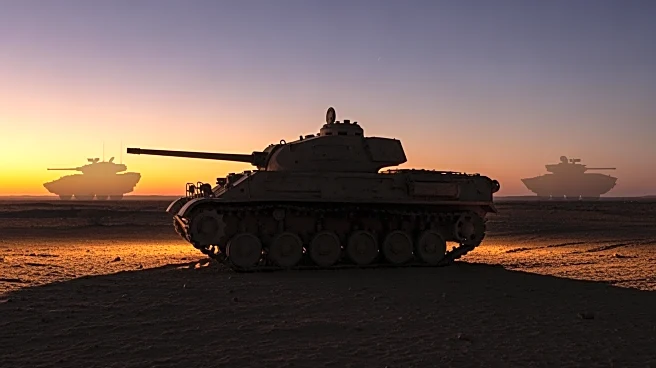
The Israeli Defense Forces (IDF) have decided to retire their fleet of Achzarit armored personnel carriers, which have been in service for decades. This decision, approved by IDF Ground Forces Commander
Maj. Gen. Nadav Lotan, comes after the vehicles played a significant role in the recent Gaza conflict. The Achzarit carriers, originally built on the chassis of Soviet T-55 tanks, have been heavily used in various conflicts, including the recent Gaza war, where they were primarily used for logistical support and evacuating wounded soldiers. Despite their reliability in short-distance missions, the vehicles have suffered from mechanical issues due to extensive use. Some officers have expressed concerns about the slow production of newer armored vehicles, such as the Namer and Eitan, which could leave gaps in the IDF's capabilities if fighting resumes.
Why It's Important?
The retirement of the Achzarit vehicles highlights a critical transition in the IDF's armored capabilities. The decision underscores the challenges faced by military forces in maintaining aging equipment while waiting for newer models to be produced. The slow production of modern armored personnel carriers could impact the IDF's readiness in future conflicts, particularly in densely populated areas like Gaza. This situation reflects broader issues in military procurement and the balance between maintaining legacy systems and investing in new technology. The IDF's decision also raises questions about resource allocation and the prioritization of defense spending, which could have implications for Israel's defense strategy and its ability to respond to regional threats.
What's Next?
The IDF will need to accelerate the production and deployment of newer armored vehicles to fill the gap left by the retirement of the Achzarit carriers. This may involve increased investment in defense manufacturing and potential collaboration with international partners to enhance production capabilities. The IDF will also need to address the concerns of officers who have relied on the Achzarit for their operational needs, ensuring that new vehicles meet the demands of modern warfare. Additionally, the IDF may need to explore interim solutions to maintain operational readiness, such as upgrading existing vehicles or acquiring temporary replacements until the new models are fully operational.