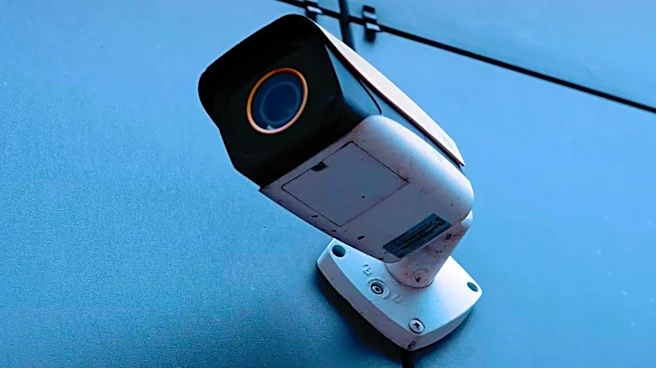

What's Happening?
The Los Angeles Police Department (LAPD) has suspended its use of surveillance cameras provided by Flock Safety, a company known for its license plate reading technology. This decision comes amid growing
concerns about privacy and data sharing practices associated with the technology. Flock Safety's cameras are used to assist law enforcement in investigating crimes and locating missing persons. However, critics argue that the technology contributes to a pervasive surveillance network that raises significant privacy issues. Dean Gialamas, the LAPD's chief information officer, stated that the department decided to discontinue the use of Flock's services until concerns regarding data privacy, security, and sharing are resolved through a contractual agreement. Despite the suspension, Flock Safety continues to operate numerous cameras across Los Angeles County and nationwide.
Why It's Important?
The suspension of Flock Safety's services by the LAPD highlights the ongoing debate between public safety and privacy rights. The use of surveillance technology by law enforcement agencies is a contentious issue, with privacy advocates expressing concerns over potential misuse and overreach. The decision by the LAPD could influence other law enforcement agencies considering similar technology, potentially impacting the market for surveillance solutions. For Flock Safety, the suspension represents a significant challenge, as it underscores the need for the company to address privacy concerns to maintain and expand its client base. The outcome of this situation could set a precedent for how privacy issues are managed in the context of public safety technology.
What's Next?
Flock Safety's CEO, Garrett Langley, has expressed hope that the relationship with the LAPD can be restored once privacy and data security concerns are addressed. The company plans to work on tightening its policies to align with privacy expectations. Meanwhile, the debate over the use of surveillance technology is expected to continue, with communities weighing the benefits of enhanced public safety against the potential infringement on individual privacy rights. The resolution of this issue could lead to new standards and regulations governing the use of surveillance technology by law enforcement agencies.