






What's Happening?
The Museum of Science in Boston is set to open a new 10,000-square-foot wing, named the William and Charlotte Bloomberg Public Science Common, on October 10. This new venue, a result of a $155 million gift from Bloomberg Philanthropies, is the largest
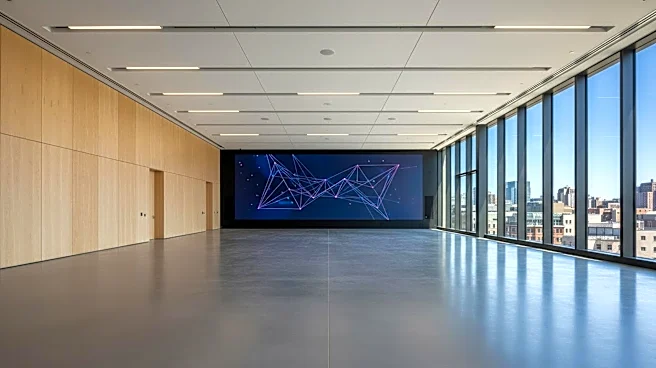
in the museum's history. The wing is designed to host live events, feature world-class speakers, and offer immersive experiences. It will include floor-to-ceiling glass windows providing 270-degree views of the Boston skyline and the Charles River. The space will be equipped with state-of-the-art immersive media, including Blackmagic 4K cameras, livestreaming technology, six movable LED video walls, and retractable seating. These features will accommodate various gatherings, from scientific discussions and school programs to evening public events, and will showcase cinematic storytelling, real-time astronomy, and space mission data.
Why It's Important?
The opening of the William and Charlotte Bloomberg Public Science Common marks a significant enhancement to Boston's cultural and educational landscape. This substantial investment in science education and public engagement underscores the growing importance of scientific literacy and accessibility. The new wing's advanced technology and immersive experiences are designed to inspire a lifelong love of science, particularly among young people, by making complex scientific concepts engaging and understandable. The venue's capacity to host diverse events, from robotics demonstrations to climate science presentations, positions the Museum of Science as a leading institution for public discourse on critical scientific and technological advancements. This expansion could attract more visitors, boost tourism, and reinforce Boston's reputation as a hub for innovation and education, benefiting the local economy and fostering a more scientifically informed populace.
What's Next?
The Museum of Science will announce its initial programming for the William and Charlotte Bloomberg Public Science Common in the coming weeks, leading up to its grand opening on October 10. Visitors can anticipate a range of activities, including robotics demonstrations showcasing advances in automation and artificial intelligence, as well as presentations on climate science and genetics. The immersive media capabilities, such as the Ars Electronica’s Deep Space system, will offer interactive journeys into various scientific realms, from the surface of Mars to the deep ocean. The d&b Soundscape spatial audio system will create natural, three-dimensional listening environments for experiences like swimming with whales. The museum aims to make science participatory and accessible to everyone, fostering a spirit of openness and dialogue.
Beyond the Headlines
The new wing at the Museum of Science represents more than just an expansion; it signifies a strategic evolution in how scientific institutions engage with the public in the 21st century. By integrating cutting-edge technology and immersive experiences, the museum is addressing the challenge of making science relevant and exciting in an increasingly digital world. This initiative reflects a broader trend in education towards experiential learning and interactive content, moving beyond traditional exhibits. The substantial philanthropic investment highlights the critical role of private funding in advancing public education and cultural enrichment. Furthermore, the focus on topics like artificial intelligence, climate science, and genetics positions the museum at the forefront of contemporary scientific discourse, encouraging public understanding and informed decision-making on issues that will shape the future.