







What's Happening?
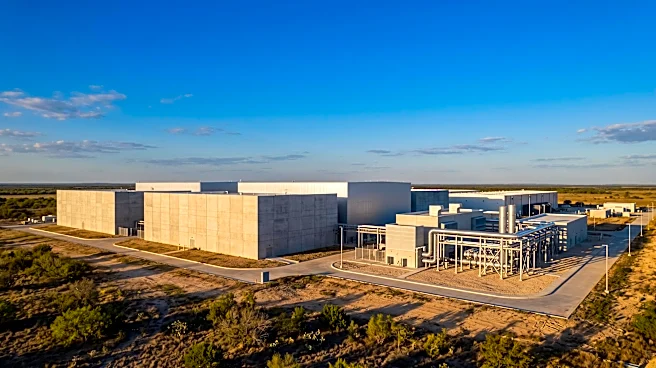
The proliferation of Artificial Intelligence (AI) is leading to a substantial increase in the energy and water consumption of data centers. While the carbon footprint of AI has garnered public attention, its water usage remains less discussed. Data centers,
which house the powerful computers processing AI requests, operate 24/7 and require immense amounts of electricity for both operation and cooling. The International Energy Agency (IEA) estimates that data centers accounted for approximately 1.5% of global electricity consumption in 2024, a figure projected to more than double by 2030 due to AI's continued spread. A typical AI-focused data center consumes as much electricity as 100,000 households, with larger facilities under construction expected to consume 20 times more. Furthermore, server cooling necessitates large quantities of water. A study by the University of California, Riverside, and the University of Texas at Arlington suggests that a single chatbot conversation can indirectly require about half a liter of water, and training the GPT-3 language model in Microsoft's U.S. data centers could consume 700,000 liters of clean freshwater. Globally, AI-related water demand is anticipated to reach between 4.2 and 6.6 billion cubic meters by 2027.
Why It's Important?
The escalating energy and water demands of AI data centers pose significant environmental and economic challenges for the U.S. and globally. The projected doubling of electricity consumption by 2030 will strain existing power grids and necessitate massive investments in new energy infrastructure, as highlighted by McKinsey, which estimates hundreds of billions of dollars needed for data centers, power grids, and energy infrastructure. This surge in demand reshapes energy, construction, and raw materials markets, creating opportunities for some industries while increasing costs and resource pressure for others. The substantial water usage, particularly in U.S. data centers, raises concerns about water scarcity and local environmental impacts, especially in regions already facing water stress. The hidden costs of AI, beyond its immediate utility, underscore the need for conscious and responsible technology use to mitigate its environmental footprint. Without sustainable practices, the benefits of AI in improving productivity and scientific research could be offset by its ecological consequences.
What's Next?
Addressing the environmental impact of AI will require a multi-faceted approach. Future developments will likely focus on improving the energy efficiency of digital infrastructure and promoting the use of renewable energy sources for data centers. This aligns with the European Commission's view that digital transformation must go hand-in-hand with the green transition. Investment in sustainable cooling technologies that reduce water consumption will also be crucial. Stakeholders, including technology companies, governments, and research institutions, will need to collaborate on developing and implementing more sustainable AI practices. This could involve optimizing AI models for lower resource consumption, exploring alternative cooling methods, and investing in renewable energy projects to power data centers. Increased transparency regarding the environmental impact of AI services may also become a focus, encouraging users to be more mindful of their digital consumption.
Beyond the Headlines
The rapid expansion of AI and its associated resource demands highlight a broader ethical and societal challenge: balancing technological advancement with environmental stewardship. The 'invisibility' of digital consumption often leads to a disconnect between online activities and their real-world environmental costs. This situation calls for a fundamental shift in how technology is perceived and consumed, moving towards a more conscious and responsible approach. The long-term implications extend to urban planning, as the siting of new data centers will increasingly depend on access to reliable and sustainable energy and water sources. Furthermore, the economic power concentrated in AI-driven companies could influence policy decisions regarding resource allocation and environmental regulations. The challenge is not to abandon AI, but to integrate sustainability into its core development and deployment, ensuring that innovation contributes positively to society without unduly burdening the planet.