

What's Happening?
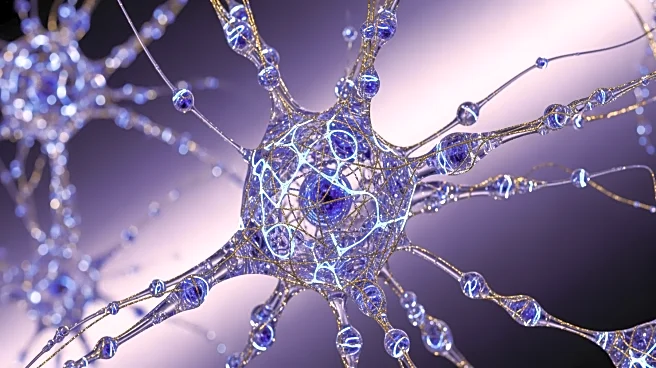
A new study has provided evidence that the hippocampus plays a crucial role in statistical learning, a process by which individuals unconsciously recognize patterns in their environment. The research involved both humans and mice, who were exposed to
sequences of sounds while performing a task. The study found that both species showed signs of surprise when the sequence of notes changed, indicating that they had learned the original pattern. The hippocampus was shown to encode these sequences and their frequency, and disrupting its activity in mice prevented them from learning the auditory patterns. This research supports the idea that the hippocampus functions as a 'general-purpose statistical learning machine.'
Why It's Important?
The findings of this study are significant as they provide new insights into the role of the hippocampus in learning and memory. Understanding how the hippocampus contributes to statistical learning can have implications for various fields, including education, neuroscience, and artificial intelligence. The ability to recognize patterns and make generalizations is fundamental to cognitive development and decision-making. This research could lead to new approaches in enhancing learning and memory in humans, as well as inform the development of AI systems that mimic human learning processes. Additionally, it may offer new perspectives on neurological disorders that affect learning and memory.
What's Next?
Future research may focus on further exploring the mechanisms by which the hippocampus supports statistical learning and how it interacts with other brain regions. Scientists may also investigate the potential for developing interventions that enhance hippocampal function to improve learning and memory. Additionally, the study's findings could inspire new AI models that incorporate principles of statistical learning observed in biological systems. Researchers may also examine the implications of these findings for understanding and treating conditions such as Alzheimer's disease and other memory-related disorders.