






What's Happening?
Bulgaria is actively working to transition its energy landscape away from coal, a move driven by escalating European Union greenhouse gas emission certificate costs and shifting geopolitical dynamics. The country's energy sector has historically relied
on nuclear capabilities and extensive lignite coal reserves, particularly in the Maritsa East complex. To manage the socioeconomic risks associated with this transition, especially for the thousands of livelihoods dependent on the Maritsa East mining region, the Bulgarian Ministry of Energy is utilizing the European Investment Bank's (EIB) Just Transition Mechanism. This strategic framework focuses on land reclamation, economic diversification, and retraining programs. The goal is to re-skill coal miners for new roles in green hydrogen development, grid digitalization, and sustainable manufacturing. This initiative reflects a broader challenge across Eastern Europe: the need to reduce carbon emissions without compromising reliable electricity, affordable energy, or the economic security of coal-dependent communities.
Why It's Important?
The EIB's involvement in Bulgaria's energy transition is crucial for several reasons. Firstly, it provides a structured financial and advisory framework to address the complex socioeconomic challenges of decarbonization. By focusing on retraining and economic diversification, the Just Transition Mechanism aims to prevent widespread economic marginalization in regions heavily reliant on coal. This approach is vital for maintaining social stability and ensuring public support for green initiatives. Secondly, the EIB's support helps Bulgaria overcome a significant bottleneck in its green transition: the lack of investment capital. While regulatory hurdles and insufficient grid capacity remain, the EIB's mechanism ensures that financial resources are available for critical projects. This model could serve as a blueprint for other Eastern European nations facing similar dilemmas, demonstrating how international financial institutions can facilitate a fair and equitable shift away from fossil fuels, thereby contributing to broader climate goals and regional stability.
What's Next?
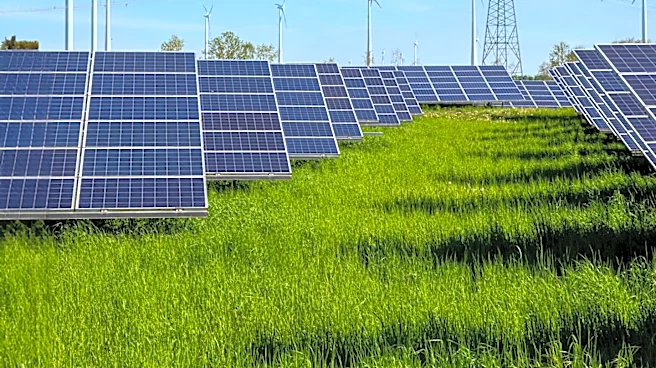
Bulgaria's immediate next steps involve the continued implementation of the EIB's Just Transition Mechanism, focusing on the specific programs for land reclamation, economic diversification, and worker retraining. The country will also need to address the primary bottlenecks identified, such as insufficient grid absorption capacity and regulatory red tape. Reforms to the Renewable Energy Sources Act, including financial guarantees for new grid applications and fast-track administrative pipelines for priority wind and solar infrastructure, are already in place. Furthermore, the integration of Battery Energy Storage Systems (BESS), supported by the EU’s National Recovery and Resilience Plan (NRRP), will be critical to stabilize the grid and manage variable solar and wind power. These efforts aim to commission over 1,000 MW of co-located storage alongside 2,660 MW of new renewable capacity, with utility-scale batteries designed to capture excess midday solar generation and discharge it during peak evening hours.
Beyond the Headlines
The Bulgarian case, supported by the EIB, highlights a deeper ethical and societal challenge inherent in global energy transitions: balancing environmental imperatives with social equity. The 'just transition' concept acknowledges that decarbonization must not leave behind communities whose livelihoods have historically been tied to fossil fuel industries. This involves not just financial aid but also comprehensive strategies for reskilling, economic diversification, and community engagement. The long-term success of such initiatives depends on fostering a sense of ownership and opportunity within affected communities, rather than imposing changes from above. Furthermore, the emphasis on grid modernization and energy storage in Bulgaria underscores a critical, often overlooked, aspect of renewable energy integration. It's not enough to generate clean energy; the infrastructure must be capable of distributing and storing it efficiently, pointing to a systemic transformation rather than just a fuel switch. This holistic approach is essential for achieving sustainable and equitable energy futures.