








What's Happening?
India has initiated the 'Vibrant Villages Programme' (VVP), a comprehensive development scheme with a combined outlay of Rs 11,639 crore, aimed at transforming border villages into vibrant centers of development and strategic partners in national security.
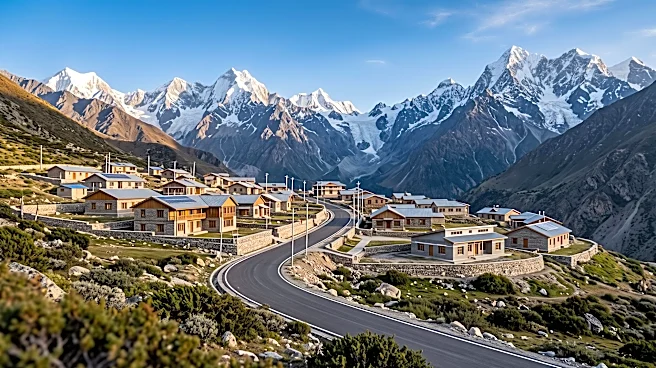
The program is being implemented in two phases and targets over 2,616 villages along India’s international land borders. The VVP seeks to improve living standards and create sustainable livelihood opportunities by expanding essential infrastructure such as road connectivity, electricity, telecommunications, healthcare, and education. This initiative marks a significant shift in the government's approach, viewing border villages as the country's 'first villages' rather than isolated settlements. The program addresses long-standing challenges like difficult terrain, inadequate connectivity, limited infrastructure, and a shortage of livelihood opportunities, which have historically led to out-migration and sparsely populated frontier areas. The VVP recognizes border residents as crucial components of the country's security architecture, aiming to foster secure and prosperous communities.
Why It's Important?
The 'Vibrant Villages Programme' is important for several reasons, primarily enhancing national security and promoting equitable development. By transforming border villages into thriving communities, India aims to strengthen its border security by ensuring that residents remain rooted in these strategic areas. This initiative directly counters the historical trend of out-migration, which has left some frontier regions vulnerable. Economically, the program will stimulate local economies by creating sustainable livelihood opportunities and improving essential infrastructure, thereby integrating these previously isolated communities into the national economic fabric. Socially, it will elevate the living standards of millions, providing access to modern amenities and services that were previously unavailable. The program's focus on comprehensive development, including healthcare and education, will empower residents and reduce regional disparities. This strategic investment underscores a holistic approach to national security, recognizing that the well-being and prosperity of border populations are intrinsically linked to the nation's overall stability and defense.
What's Next?
The 'Vibrant Villages Programme' will continue its implementation in two phases, VVP-I and VVP-II, across more than 2,616 villages along India’s international land borders. VVP-I, a Centrally Sponsored Scheme, will proceed in partnership with states, focusing on villages along the northern border. VVP-II, a Central Sector Scheme, will extend the development approach to other international land borders, funded entirely by the central government. The ongoing efforts will involve the continuous expansion of road connectivity, electricity, telecommunications, healthcare, and educational facilities. Monitoring and evaluation mechanisms will likely be put in place to assess the program's effectiveness in improving living standards, creating livelihood opportunities, and strengthening border security. Future steps will also include addressing any emerging challenges in implementation, ensuring that the program adapts to the specific needs of diverse border communities, and potentially expanding its scope based on initial successes and lessons learned.
Beyond the Headlines
Beyond the immediate goals of infrastructure development and livelihood creation, the 'Vibrant Villages Programme' carries profound geopolitical and socio-cultural implications. By rebranding border villages as 'first villages,' India is subtly shifting its national narrative, emphasizing the strategic importance and integral role of these communities in the national identity. This reframing can foster a stronger sense of belonging and national pride among border residents, potentially counteracting external influences and strengthening national cohesion. Ethically, the program addresses historical neglect and marginalization of these communities, promoting a more inclusive vision of national development. Culturally, the influx of modern amenities and opportunities could lead to a dynamic interplay between traditional lifestyles and contemporary advancements, requiring careful management to preserve unique local cultures while facilitating progress. The long-term success of VVP could serve as a model for other nations facing similar challenges in securing and developing their frontier regions, highlighting the critical link between human development and national security.