





What's Happening?
The Trump administration is experiencing internal conflict with Health and Human Services Secretary Robert F. Kennedy Jr. and his 'Make America Healthy Again' (MAHA) campaign. The discord centers around recent policy decisions, particularly concerning
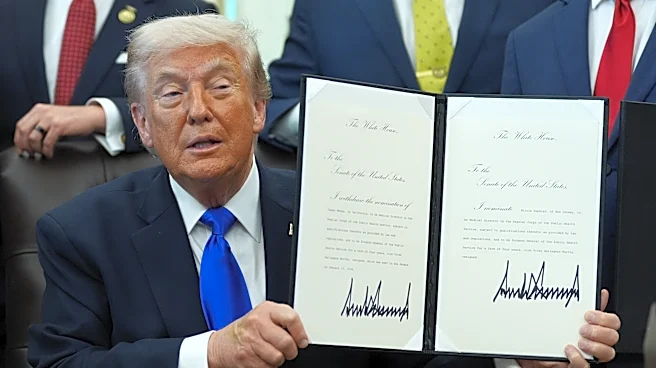
pesticide regulations and the nomination of a new surgeon general. The MAHA campaign, which emphasizes health-first policies, is at odds with some of the administration's 'America-first' initiatives, leading to a divide within the Republican Party. This tension is exacerbated by the upcoming U.S. midterm elections, as MAHA supporters express dissatisfaction with the administration's stance on health-related issues.
Why It's Important?
The rift within the GOP could have significant implications for the party's cohesion and electoral prospects. The MAHA campaign's focus on health issues resonates with a segment of the Republican base that is skeptical of traditional public health and agricultural policies. This internal conflict may weaken the party's unified front, potentially affecting its performance in the midterms. Additionally, the debate over pesticide regulations and the nomination of Nicole Saphier as surgeon general highlights broader tensions between health advocacy and industry interests, which could influence public policy and regulatory approaches in the future.
What's Next?
As the midterms approach, the GOP will need to navigate these internal divisions to maintain electoral competitiveness. The outcome of the Supreme Court case involving glyphosate-based herbicides could further influence the party's stance on environmental and health regulations. The administration's ability to reconcile the MAHA and MAGA factions will be crucial in shaping its policy agenda and maintaining party unity. The Democratic Party may seek to capitalize on these divisions by appealing to voters concerned about health and environmental issues.
Beyond the Headlines
The conflict between MAHA and MAGA reflects deeper ideological divides within the Republican Party regarding the balance between economic growth and public health. This tension could lead to long-term shifts in the party's policy priorities and voter base. The debate over pesticide use and health regulations also raises ethical questions about the role of government in protecting public health versus supporting industry interests. These issues may prompt broader discussions about the future direction of U.S. health and environmental policy.