



What's Happening?
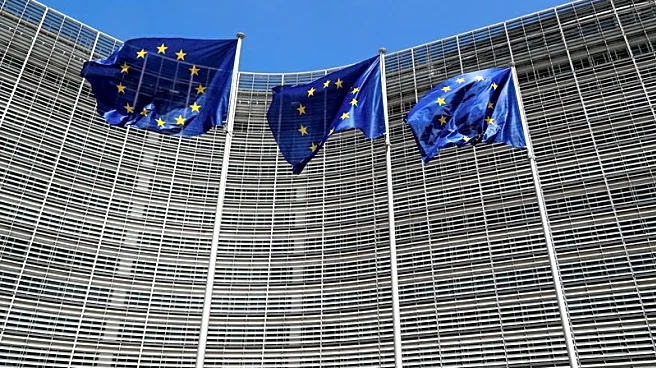
The advocate general for the European Union's highest court has recommended annulling a 2023 decision by the European Commission to release billions in funding to Hungary. This funding had been previously suspended due to concerns over rule-of-law and
corruption. The European Commission initially withheld the funds in 2022, citing democratic backsliding and corruption under Hungary's right-wing populist government. However, the Commission later determined that Hungary had implemented sufficient reforms to justify releasing approximately 10.2 billion euros. Advocate General Tamara Ćapeta, in a non-binding opinion, argued that Hungary had not completed the necessary judicial reforms at the time of the fund release. Although not legally binding, such opinions are often influential in the court's final decision.
Why It's Important?
This development is significant as it highlights ongoing tensions between the European Union and Hungary regarding democratic standards and governance. The EU's decision to suspend and then release funds reflects its leverage over member states to enforce compliance with democratic norms. The outcome of this legal challenge could impact Hungary's economy, which relies heavily on EU funding. Additionally, it underscores the broader struggle within the EU to maintain cohesion and enforce rule-of-law standards among its members. The case also illustrates the EU's mechanisms for addressing perceived democratic backsliding, which could set precedents for future interactions with other member states.
What's Next?
The European Court of Justice will consider the advocate general's opinion, which could lead to the annulment of the Commission's decision to release the funds. If the court follows the recommendation, Hungary may face further financial constraints, exacerbating its economic challenges. This situation could influence Hungary's domestic politics, particularly with upcoming elections where Prime Minister Viktor Orbán faces significant opposition. The decision may also prompt the EU to reassess its strategies for ensuring compliance with democratic standards among member states, potentially leading to stricter enforcement measures or revised funding criteria.
Beyond the Headlines
The case against Hungary reflects broader concerns about the EU's ability to enforce democratic norms and the balance of power between national sovereignty and EU oversight. Hungary's situation raises questions about the effectiveness of the EU's current mechanisms for addressing rule-of-law violations and the potential need for reform. The ongoing tensions also highlight the challenges of maintaining unity within the EU, as member states with differing political systems and priorities navigate shared governance structures. The outcome of this case could influence future EU policies and the relationship between the EU and its member states.