


What's Happening?
A verified voter from Highland, NY, has sent an open letter to Representative Ryan, urging him to pressure House leadership to call a vote on H.Con.Res. 106, the Cuba War Powers Resolution. The letter expresses strong opposition to a potential war with
Cuba, citing humanitarian concerns such as starving children, increasingly difficult access to medical care, and the approaching winter. The voter emphasizes that Americans are not in favor of a war with Cuba and calls for an end to the current blockade, which they believe is terrorizing the country. The letter was sent on September 15, highlighting the urgency of the matter and the desire for immediate congressional action on the resolution.
Why It's Important?
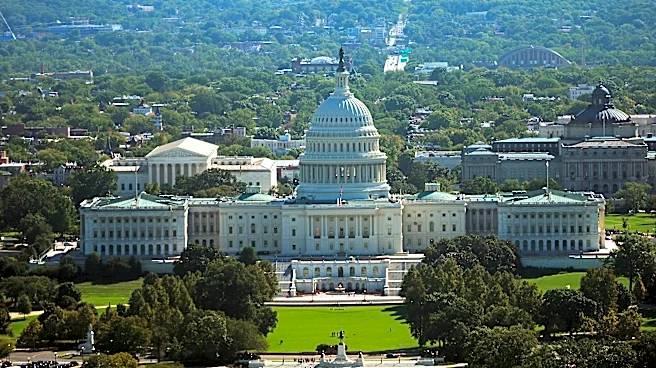
This letter underscores growing public concern regarding U.S. foreign policy towards Cuba and the potential for military conflict. The call for a vote on the Cuba War Powers Resolution reflects a desire for congressional oversight and a reassertion of legislative authority in matters of war and peace, as outlined in the War Powers Act. The humanitarian issues cited—starvation, lack of medical care, and the impact of winter—highlight the severe consequences of current policies and potential conflict on the Cuban population. For Representative Ryan, this letter represents direct constituent pressure to act on a significant foreign policy issue. It also indicates a broader sentiment among some Americans that the U.S. blockade against Cuba is detrimental and should be re-evaluated. The resolution, if brought to a vote, could force a public debate on U.S.-Cuba relations and potentially alter the course of current policies, impacting both countries significantly.
What's Next?
The immediate next step would involve Representative Ryan considering the constituent's request and potentially engaging with House leadership to advocate for a vote on H.Con.Res. 106. The success of this effort would depend on the level of support within Congress for such a resolution and the willingness of House leadership to prioritize it. If the resolution is brought to a vote, it would initiate a formal debate on U.S. policy towards Cuba, including the blockade and the potential for military action. This could lead to increased public awareness and further advocacy from various civil society groups. The outcome of any such vote would have significant implications for U.S.-Cuba relations, potentially leading to a re-evaluation of sanctions or a shift in diplomatic strategy. Conversely, if the resolution does not gain traction, the current U.S. policy towards Cuba, including the blockade, would likely continue unchanged.
Beyond the Headlines
This constituent letter touches upon the complex and often contentious history of U.S.-Cuba relations, which has been shaped by decades of political and economic policies, including the ongoing embargo. The call for a War Powers Resolution vote highlights the constitutional tension between the executive and legislative branches regarding the authority to declare and engage in military conflict. It also brings to the forefront the ethical dimensions of foreign policy, particularly when it impacts the humanitarian conditions of a civilian population. The reference to the blockade 'terrorizing' the country suggests a strong moral stance against economic sanctions as a tool of foreign policy. This situation could reignite broader discussions about the effectiveness and morality of such blockades, and whether they achieve their intended political goals or primarily inflict suffering on ordinary citizens. It also underscores the power of individual citizens to influence policy through direct communication with their elected representatives.