








What's Happening?
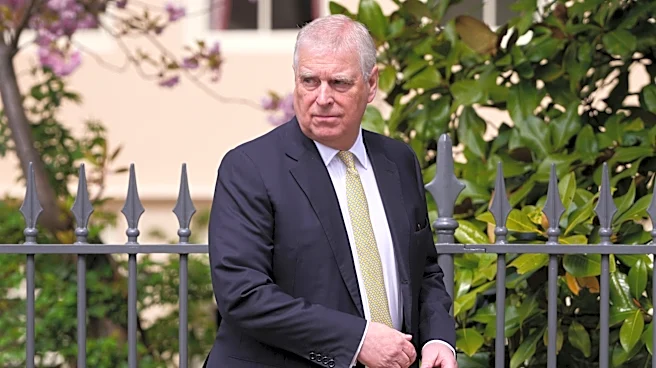
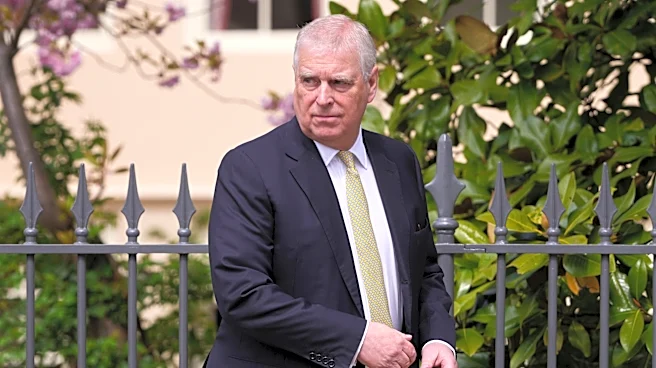
Documents released recently reveal that the late Queen Elizabeth II was 'very keen' on appointing her son, former Prince Andrew, as Britain's trade envoy in 2001. This decision, which faced little scrutiny from government ministers, has come under renewed
examination due to Andrew's controversial associations, particularly with Jeffrey Epstein. The documents suggest that the Queen's personal affection for her son may have influenced her decision-making, despite the potential risks to the monarchy's reputation. Andrew served as a trade envoy until 2011, when he stepped down amid concerns over his connections with questionable figures. The release of these documents has reignited discussions about the monarchy's handling of Andrew's role and the implications of his associations.
Why It's Important?
The revelations about Queen Elizabeth II's involvement in Prince Andrew's appointment as a trade envoy highlight ongoing concerns about the influence of personal relationships on public roles within the British monarchy. This situation underscores the challenges faced by the royal family in maintaining public trust, especially when personal and public interests intersect. The controversy surrounding Andrew's associations with Epstein has already led to significant reputational damage for the monarchy, and these new insights could further complicate the royal family's efforts to distance itself from scandal. The situation also raises broader questions about accountability and transparency in the appointment of public figures to influential roles.