






What's Happening?
Bestselling author and Baltimore native Ta-Nehisi Coates participated in a fireside chat following a screening of the documentary 'Baltimore Heirs: The Last Deed Undone' at the Reginald F. Lewis Museum. The event highlighted the issue of heirs' property
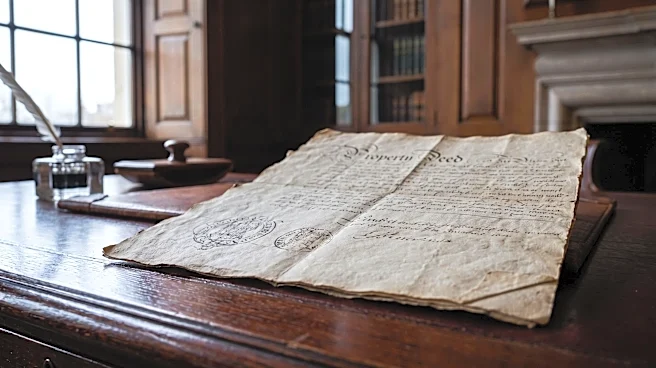
in Baltimore, where an estimated 7,000 homes are at risk due to tangled titles. Heirs' property refers to family homes or land passed down through generations without proper legal documentation, preventing living relatives from having their names on the deed. This issue disproportionately affects Black families and contributes to the erosion of generational wealth and Baltimore's vacant housing problem. Proceeds from the event benefited the SOS Fund, a housing justice organization co-founded by Nneka N'Namdi, which aims to support homeowners with property taxes, water bills, and heirs' property education. The documentary examines the systemic displacement and inequitable housing policies that have historically impacted Black communities.
Why It's Important?
The issue of heirs' property is critical because it prevents families from accessing essential financial resources and protections. Without clear titles, property owners are often ineligible for conventional lending programs, tax credits, home repair programs, and disaster-recovery assistance. This vulnerability can lead to abandonment of properties, contributing to urban blight and further diminishing generational wealth, particularly within Black communities. Research from the Urban Institute indicates that 9.8% of Black property owners aged 50 and older are at risk of tangled titles, significantly higher than for white property owners. This disparity underscores the lasting impact of historical inequities in housing policy. The discussion featuring Ta-Nehisi Coates brings significant attention to this often-overlooked crisis, emphasizing its role in widening the racial wealth gap and perpetuating housing instability.
What's Next?
Efforts to address heirs' property are gaining momentum, with various initiatives being implemented and proposed. Maryland recently introduced a new tool allowing homeowners to name an intended beneficiary at the time of purchase, aiming to prevent future tangled titles. Other cities like Philadelphia and Atlanta have launched programs, including dedicated funds and title clearance units, to help residents resolve title disputes and navigate probate processes. The continued work of organizations like the SOS Fund, supported by events like the documentary screening, will be crucial in providing direct assistance and education to affected homeowners. Future legislative efforts and community-based programs are expected to focus on simplifying legal processes, offering financial aid, and raising awareness to protect generational assets and stabilize housing in vulnerable communities.
Beyond the Headlines
The problem of heirs' property extends beyond individual family disputes; it represents a profound systemic issue rooted in historical injustices and a lack of accessible legal resources. The disproportionate impact on Black families highlights how past discriminatory practices, such as redlining and predatory lending, continue to manifest in contemporary wealth disparities. The absence of estate planning, often due to lack of awareness or financial barriers, exacerbates the problem, creating a cycle of vulnerability. Addressing heirs' property requires a multi-faceted approach that includes legal aid, financial literacy, and policy reforms to simplify property transfer laws. This issue also touches upon the broader theme of land ownership as a cornerstone of economic stability and social equity, underscoring the need for proactive measures to safeguard community assets and ensure equitable access to property rights.