
What's Happening?
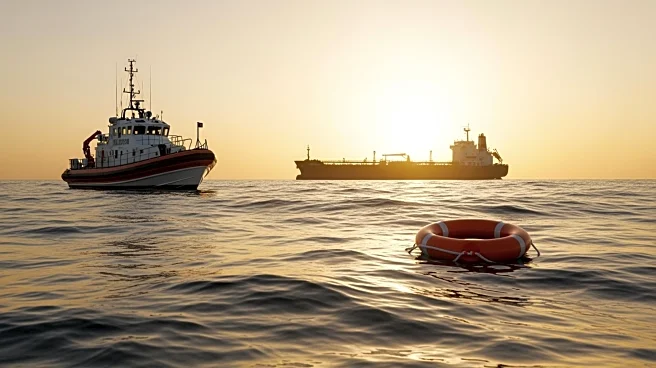
The US Coast Guard Sector San Juan Command Center, in collaboration with the crew of the Horten Liberian-flagged tanker, successfully rescued Benoit Bourguet, a 47-year-old Belgian rower, in the Atlantic
Ocean east of Puerto Rico. Bourguet was participating in the World's Toughest Row Race, a 3,000-mile rowing competition from Spain to Antigua, when his vessel, City of Liverpool, was capsized by two rogue waves in 13 to 15-foot seas. After deploying his life raft, Bourguet sent out an emergency distress signal, which was picked up by the Coast Guard. The Horten tanker diverted its course to reach Bourguet, who was found dehydrated but otherwise in good health after being in distress for approximately 24 hours.
Why It's Important?
This rescue operation underscores the critical role of international maritime cooperation and the effectiveness of emergency response systems like the Automated Mutual-Assistance Vessel Rescue (AMVER) program. The successful coordination between the US Coast Guard and the Horten tanker crew highlights the importance of preparedness and swift action in maritime emergencies. The incident also emphasizes the necessity for mariners to have functional and properly registered emergency equipment, such as the Emergency Positioning Indicating Radio Beacon (EPIRB), which was instrumental in locating Bourguet. This event serves as a reminder of the inherent risks in oceanic competitions and the need for robust safety measures.
What's Next?
Following the rescue, Benoit Bourguet will likely undergo medical evaluation and recovery from his ordeal. The incident may prompt race organizers to review and possibly enhance safety protocols for future events. Additionally, the US Coast Guard and maritime organizations might use this case to advocate for increased awareness and registration of emergency signaling devices among mariners. The successful rescue could also lead to further collaboration and training exercises between international maritime entities to improve response times and outcomes in similar situations.
Beyond the Headlines
The rescue operation highlights the ethical responsibility of maritime operators to assist those in distress at sea, reflecting a long-standing tradition of solidarity among seafarers. It also raises questions about the balance between adventure sports and safety, particularly in extreme environments. The incident may influence public perception of oceanic races, potentially leading to increased scrutiny and regulation to ensure participant safety. Furthermore, it showcases the technological advancements in maritime safety equipment and the importance of maintaining these systems to prevent loss of life.