




What's Happening?
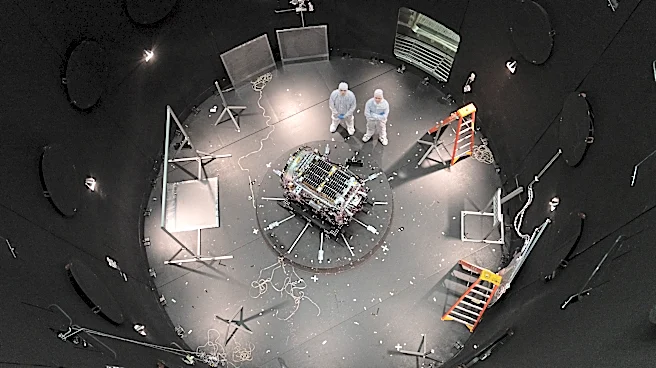
The LINK spacecraft, launched on July 3 aboard a Northrop Grumman Pegasus rocket, is experiencing significant control issues. The spacecraft, intended to rendezvous with NASA's Swift Observatory, began spinning uncontrollably, complicating communication
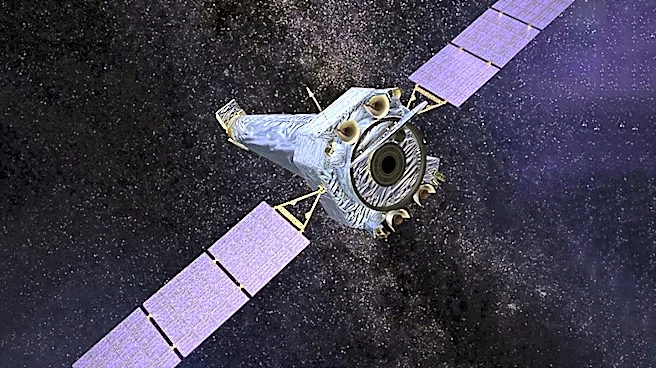
efforts. NASA reported that two of the three reaction wheels, crucial for maintaining the spacecraft's alignment, have failed. Additionally, there are problems with one of the thruster systems. Despite these setbacks, efforts are underway to stabilize the spacecraft using backup thrusters. The mission marks the first time NASA has contracted a private company to elevate one of its telescopes to a higher orbit, aiming to extend the operational life of the Swift Observatory.
Why It's Important?
This development is significant as it highlights the challenges and risks associated with private-public partnerships in space exploration. The mission's success is crucial for maintaining the Swift Observatory's ability to monitor gamma-ray bursts, which are vital for astrophysical research. The issues faced by the LINK spacecraft could impact future collaborations between NASA and private companies, potentially affecting the pace and nature of space exploration initiatives. The situation also underscores the importance of robust engineering and contingency planning in space missions, as even minor failures can have significant repercussions.
What's Next?
NASA and Katalyst Space Technologies are working to resolve the spacecraft's issues. The focus is on stabilizing the LINK spacecraft to proceed with the mission. If successful, the spacecraft will attach to the Swift Observatory and use its thrusters to elevate the telescope's orbit. The outcome of this mission could influence future contracts and collaborations between NASA and private aerospace companies. Stakeholders will be closely monitoring the situation to assess the viability of similar missions in the future.