



What's Happening?
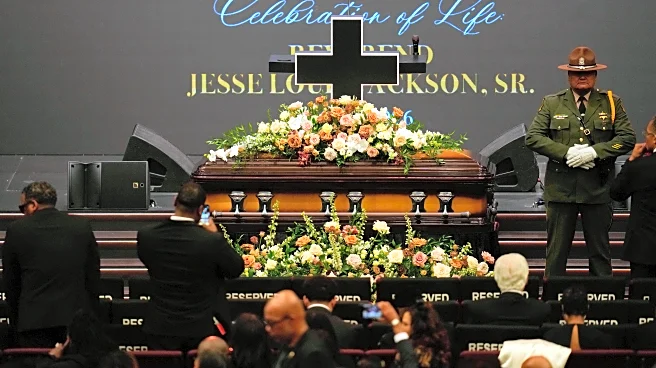
The legacy of Reverend Jesse Jackson, who passed away on February 17, 2026, at the age of 84, is being honored during the annual commemorative crossing of the Edmund Pettus Bridge in Selma, Alabama. This event marks the anniversary of the historic 1965
march for voting rights, known as 'Bloody Sunday,' where marchers were violently confronted by law enforcement. Jackson, a prominent civil rights leader, was instrumental in the movement, organizing students to support Martin Luther King Jr.'s call for action. His efforts extended beyond civil rights to economic justice, leading initiatives like Operation Breadbasket and founding Operation PUSH. Jackson's work paved the way for future leaders and movements advocating for equality and justice.
Why It's Important?
Jesse Jackson's contributions to the civil rights movement and his advocacy for economic justice have had a lasting impact on American society. His efforts helped to secure voting rights and create economic opportunities for Black communities, challenging systemic racism and inequality. Jackson's legacy continues to inspire new generations of activists and leaders who strive for social justice and equality. The commemoration of his work at the Edmund Pettus Bridge serves as a reminder of the ongoing struggle for civil rights and the importance of honoring those who have fought for change.
What's Next?
The commemoration of Jesse Jackson's legacy at Selma highlights the need for continued advocacy and action in the fight for civil rights and social justice. As the nation reflects on the progress made since the 1960s, there is a renewed focus on addressing current challenges, such as voter suppression and economic inequality. Activists and leaders are likely to draw inspiration from Jackson's work to push for policy changes and initiatives that promote equality and justice for all Americans.
Beyond the Headlines
Jesse Jackson's life and work underscore the interconnectedness of civil rights and economic justice. His efforts to address both issues highlight the importance of a holistic approach to social change. The commemoration of his legacy serves as a call to action for individuals and communities to continue advocating for a more equitable and just society. Jackson's vision of a 'Rainbow Coalition' that unites diverse groups in the fight for justice remains relevant today, as the nation grapples with issues of race, class, and inequality.