






What's Happening?
The Trump administration is intensifying its immigration enforcement efforts by aiming to detain approximately 100,000 individuals this fiscal year, a significant increase from previous years. This move involves expanding detention capacity through the
acquisition of 11 warehouses across the United States. The administration's strategy marks a shift from high-profile enforcement operations to a more subdued approach, while still maintaining ambitious deportation goals. Despite a decrease in immigration arrests and the number of people in detention, the administration plans to remove 1 million individuals this fiscal year. This recalibration comes amid declining public support for aggressive immigration policies and ongoing debates about the effectiveness and legality of these measures.
Why It's Important?
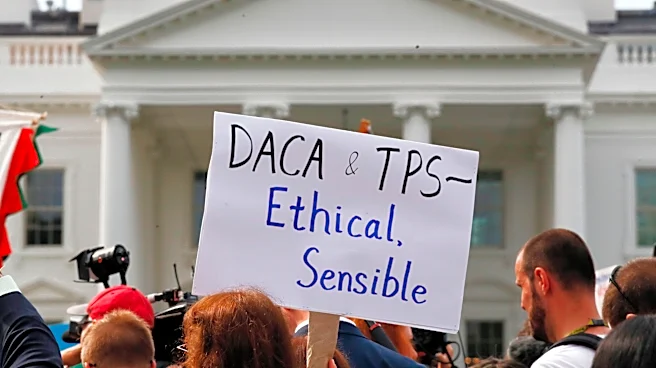
The expansion of immigration detention facilities and the recalibration of enforcement strategies have significant implications for U.S. immigration policy and affected communities. The administration's focus on increasing detention capacity and deportation numbers could lead to heightened tensions between federal authorities and immigrant communities. This approach may also impact local economies and social services, particularly in areas with large immigrant populations. Additionally, the administration's efforts to strip away legal protections for certain migrants could create a chilling effect, discouraging immigrants from seeking legal recourse or assistance. The broader implications of these policies could influence public opinion and political discourse on immigration in the U.S.
What's Next?
The Trump administration is likely to continue its efforts to expand detention capacity and increase deportation numbers. This may involve further collaboration with local and state law enforcement agencies to enforce immigration laws. The administration's focus on stripping away legal protections for migrants could lead to additional legal challenges and public protests. As the administration pursues its immigration agenda, it may face increased scrutiny from advocacy groups and political opponents. The outcome of these efforts could shape future immigration policies and influence the political landscape in the U.S.
Beyond the Headlines
The Trump administration's immigration policies raise ethical and legal questions about the treatment of migrants and the balance between enforcement and humanitarian considerations. The expansion of detention facilities and the focus on deportation may exacerbate existing tensions between federal authorities and immigrant communities. These policies could also have long-term cultural implications, affecting how immigrants are perceived and treated in the U.S. The administration's approach may prompt discussions about the role of immigration in American society and the values that underpin U.S. immigration policy.