



What's Happening?
India and the United Arab Emirates (UAE) are considering a new energy security arrangement that would allow India to store part of its strategic oil reserves in Fujairah, UAE, while expanding the Abu Dhabi National Oil Company's (ADNOC) access to storage
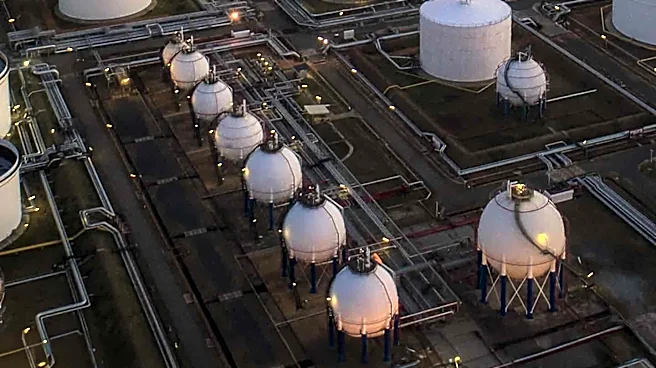
facilities in India. This proposal, announced during a May 2026 visit, builds on an existing energy partnership that has evolved from crude oil supplies to joint investments in oil production, strategic reserves, and long-term gas contracts. Under the proposed deal, ADNOC could store up to 30 million barrels of crude oil in India. The two nations are also exploring the possibility of India holding some of its emergency oil stocks in Fujairah, a significant UAE export hub located outside the Strait of Hormuz. This arrangement aims to bolster energy security for both countries and reduce their vulnerability to disruptions along critical oil shipping routes. The partnership dates back to May 2018, when ADNOC began storing crude in India, with the right to sell it commercially.
Why It's Important?
This proposed strategic oil storage deal is significant for enhancing energy security for both India and the UAE. For India, a nation heavily reliant on imported energy, gaining access to reserves in Fujairah provides greater flexibility in managing its strategic oil stocks and reduces exposure to potential disruptions in the Strait of Hormuz, a vital but often volatile shipping lane. This diversification of storage locations is crucial for India's economic stability and national security. For the UAE, expanding ADNOC's access to storage facilities in India strengthens its position as a major energy supplier and deepens its strategic ties with a rapidly growing energy consumer. The deal also signifies a broader trend of energy-producing and consuming nations collaborating to mitigate supply chain risks and ensure stable energy flows in an increasingly complex geopolitical landscape. This partnership could serve as a model for other nations seeking to enhance their energy resilience.
What's Next?
The proposed arrangement is currently under consideration, with discussions ongoing between India and the UAE. If finalized, the agreement could involve utilizing existing storage facilities in Visakhapatnam, Andhra Pradesh, and developing new reserve infrastructure in Chandikol, Odisha, for ADNOC's storage in India. Concurrently, India would gain access to oil reserves in Fujairah. Beyond crude oil, the two countries are also strengthening cooperation in natural gas and petroleum products, with ADNOC and Indian Oil exploring long-term LPG supply arrangements. ADNOC is also developing a second export route to Fujairah through its West-East Pipeline project, expected to be operational in 2027, which would double its export capacity through the port. These developments indicate a deepening and broadening energy partnership that will likely see further integration and collaboration in the coming years.
Beyond the Headlines
This strategic energy partnership extends beyond immediate oil storage benefits, signaling a long-term commitment to mutual energy security and economic cooperation. The move to store oil outside the Strait of Hormuz highlights a growing global concern over maritime security and the vulnerability of critical chokepoints to regional conflicts. By diversifying storage and export routes, both India and the UAE are proactively addressing potential geopolitical risks that could impact global energy markets. Furthermore, the expansion into LNG and LPG cooperation indicates a broader energy transition strategy, where traditional oil partnerships are evolving to include cleaner energy sources. This comprehensive approach to energy collaboration could foster greater regional stability and economic interdependence, setting a precedent for how nations manage their energy needs in an era of increasing uncertainty and evolving energy landscapes.