


What's Happening?
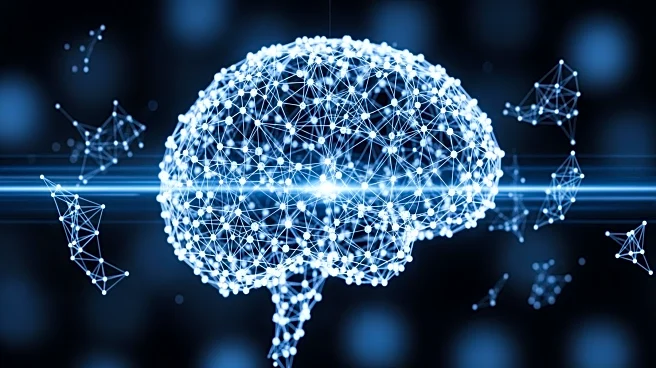
A team of scientists from Dartmouth College, MIT, and the State University of New York at Stony Brook have developed a new computational model of the brain that mimics its biological and physiological processes. This model has successfully learned a visual
category learning task as well as lab animals, revealing previously unnoticed neuron activity. The model was constructed to represent neuron connections and communication across brain regions, producing cognition and behavior. It performed tasks similar to those done by animals, showing similar neural activity and behavioral results. The research, published in Nature Communications, aims to provide insights into brain function and potential interventions for diseases. The team has founded Neuroblox.ai to develop biotech applications of the model.
Why It's Important?
The development of this brain model is significant as it offers a new platform for understanding brain function and potential therapeutic interventions. By simulating brain activity, researchers can explore how the brain might operate differently in disease states and identify interventions to correct these aberrations. This model could revolutionize drug development and efficacy testing, allowing for earlier testing before clinical trials. The ability to mimic real brain activity provides a more efficient way to discover and improve neurotherapeutics, potentially reducing the risk and expense associated with traditional methods. The model's ability to reveal overlooked neuron activity could lead to new insights into brain function and learning processes.
What's Next?
The research team plans to expand the model to handle a wider variety of tasks and circumstances. This includes adding more brain regions and neuromodulatory chemicals to increase its sophistication. They are also testing how interventions, such as drugs, affect the model's dynamics. The ongoing development of the model aims to enhance its application in biotech, particularly in drug development and testing. As the model becomes more advanced, it could provide deeper insights into brain function and potential treatments for neurological disorders.
Beyond the Headlines
The model's discovery of 'incongruent' neurons, which predict errors, suggests a potential mechanism for adapting to changing conditions. This could have implications for understanding how the brain learns and adapts to new rules or environments. The model's ability to simulate real-world brain dynamics offers a unique opportunity to explore the ethical and cultural dimensions of brain research, particularly in the context of developing neurotherapeutics. As the model evolves, it may also contribute to long-term shifts in how brain research is conducted and applied in clinical settings.