





What's Happening?
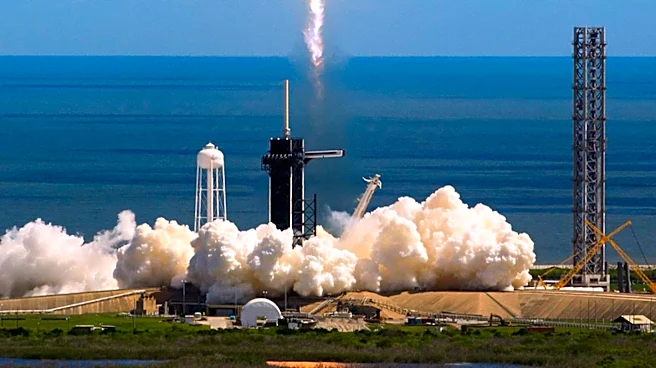
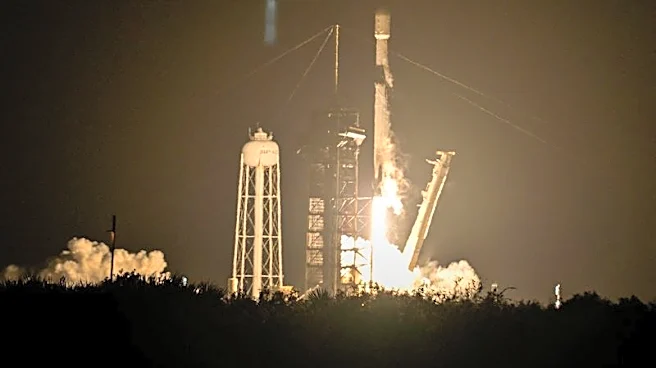
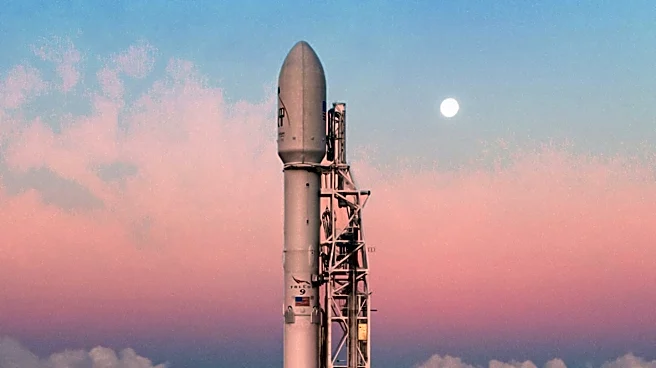
A four-tonne piece of a SpaceX Falcon 9 rocket, which has been adrift in space since January 2025, is believed to have unintentionally crashed into the moon. The collision, occurring at a speed of 5,400 mph, was expected to create a new crater on the lunar
surface. This event poses no threat to Earth but offers a unique opportunity for scientific research. The rocket segment, part of a mission that launched two commercial lunar landers, was on an uncontrolled trajectory due to a combination of solar activity and gravitational forces. NASA plans to collect data from the impact to enhance understanding of artificial impacts and their implications for lunar exploration.
Why It's Important?
The incident highlights the growing issue of space debris and the challenges of managing leftover space hardware. While the impact itself is not dangerous, it underscores the need for better disposal practices for space junk. The creation of a new lunar crater provides scientists with a chance to study the effects of such impacts, potentially offering insights into lunar geology and the behavior of ejecta. This event also serves as a reminder of the complexities involved in space missions and the importance of tracking and managing space debris to prevent unintended consequences.
What's Next?
NASA and other space agencies are expected to analyze the data collected from the impact to refine techniques for tracking space objects. This could lead to improved strategies for managing space debris and preventing future collisions. Additionally, discussions between NASA and SpaceX may focus on developing measures to avoid similar incidents in the future. The event may also prompt broader discussions within the space community about the sustainability of space exploration and the need for international cooperation in managing space debris.