





What's Happening?
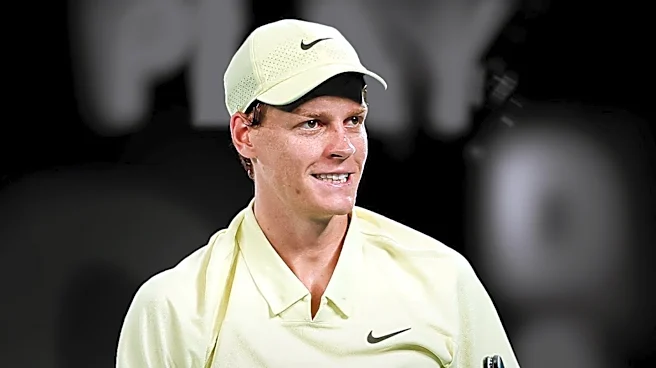
The Jannik Sinner Foundation has announced a two-year partnership with UNICEF, aiming to provide educational support to nearly 100,000 children affected by conflicts and humanitarian crises globally. This initiative, highlighted by TNT Sports, will establish
temporary learning spaces in areas where schools have been damaged or destroyed. UNICEF will also distribute educational kits, including 'School-in-a-Box' kits designed to support approximately 40 children and one teacher with basic classroom materials. Other kits will focus on early childhood development and recreation, offering opportunities for sport and physical activity. The Foundation, established in 2025 by tennis player Jannik Sinner, focuses on education, sport, and opportunity. This partnership expands on Sinner's previous philanthropic efforts, such as the #SinnerPizzaChallenge during the COVID-19 pandemic, which raised funds for medical supplies in Italy.
Why It's Important?
This partnership underscores the growing role of public figures and their foundations in addressing global humanitarian challenges, particularly in education during crises. By focusing on children in conflict and disaster-affected regions, the initiative aims to provide stability and a sense of normalcy through continued learning and physical activity. UNICEF Italy president Nicola Graziano emphasized that education helps children regain normality in emergencies, while Jannik Sinner Foundation director Christina Tauber stressed the importance of learning and growth even in difficult circumstances. The provision of educational and recreational kits can mitigate the long-term impact of displacement and conflict on children's development, offering them a chance to build a future despite their challenging present. This model of collaboration between sports figures and international organizations sets a precedent for leveraging influence and resources for significant social impact.
What's Next?
Over the next two years, the Jannik Sinner Foundation and UNICEF will focus on implementing their programs to reach the targeted 100,000 children. This will involve the establishment of temporary learning spaces and the distribution of various educational and recreational kits in affected regions. The partnership will likely involve ongoing monitoring and evaluation to assess the effectiveness of the programs and make necessary adjustments. Further fundraising efforts and public awareness campaigns may also be launched to sustain and potentially expand the initiative. The success of this program could inspire other athletes and public figures to engage in similar large-scale humanitarian efforts, potentially leading to more collaborations aimed at addressing global educational disparities and supporting vulnerable populations.
Beyond the Headlines
This collaboration highlights a broader trend of athletes using their platforms for social good, moving beyond traditional endorsements to establish foundations with significant humanitarian goals. It also brings attention to the critical need for education in emergency contexts, often overlooked amidst immediate survival concerns. The emphasis on both academic learning and physical activity recognizes the holistic development of children, acknowledging that play and sport can be crucial for coping with trauma and fostering resilience. This initiative could also influence corporate social responsibility, encouraging brands that partner with athletes to support their philanthropic endeavors, thereby amplifying the impact of such partnerships. The long-term implications could include a shift in how celebrity influence is perceived and utilized, moving towards more impactful and sustainable social contributions.