

What's Happening?
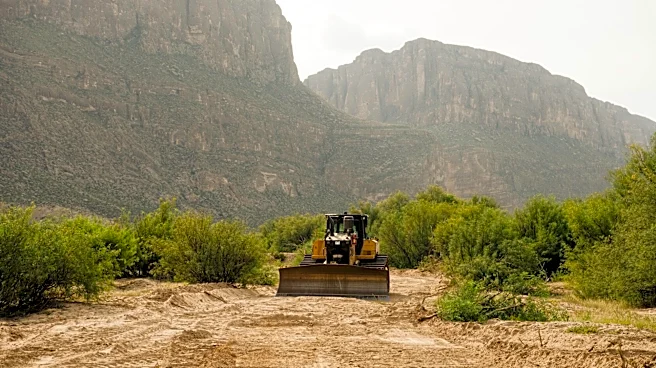
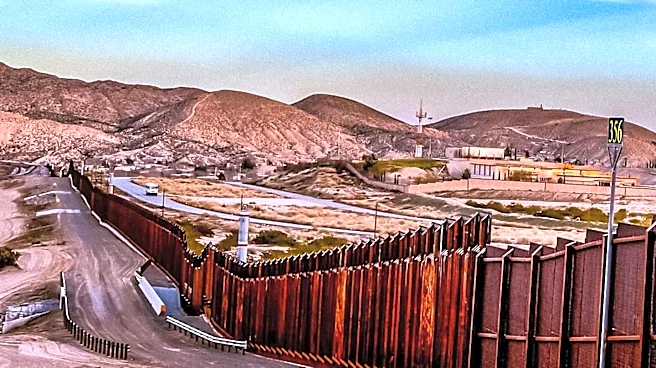
Texas Republicans are facing a political dilemma regarding the Trump administration's plans to construct an access road and vehicle barriers in Big Bend National Park and 30-foot barriers on private land outside the park. This initiative has sparked bipartisan
outrage in West Texas, forcing Republican leaders to carefully articulate their positions. While some, like U.S. Sen. Ted Cruz, have welcomed a construction pause to hear local concerns, others, such as Comptroller Don Huffines, have openly criticized the idea of a permanent wall in Big Bend. Attorney General Ken Paxton, a staunch ally of President Trump, initially hesitated but later issued a statement calling the plan 'not smart border security.' The controversy highlights a rare instance where Texas Republicans are not fully aligned with the White House on border policy, as many constituents and local officials believe a physical barrier is unnecessary in the Big Bend sector, which is the largest yet quietest along the U.S.-Mexico border.
Why It's Important?
This situation is important because it reveals a significant crack in the unified Republican front on border security, particularly concerning the Trump administration's policies. The backlash from constituents and local officials in West Texas demonstrates that even within a traditionally conservative state, there are limits to support for federal initiatives when they impact cherished natural resources and local communities. The careful navigation by Republican leaders, including a rare public disagreement from Attorney General Ken Paxton, underscores the political sensitivity of the issue, especially with upcoming midterm elections. Democrats are capitalizing on this division, highlighting the perceived federal overreach and the potential environmental damage. This could influence voter sentiment in key races and potentially shift power dynamics in Congress, as Democrats aim to secure statewide victories for the first time since 1994.
What's Next?
U.S. Customs and Border Protection (CBP) Commissioner Rodney Scott has announced a temporary pause in construction to meet with local officials and hear their concerns. Federal officials are expected to make a decision regarding the construction pause in the coming weeks. Local elected officials have suggested alternative solutions, such as infrared surveillance technology, instead of physical barriers, which Scott reportedly made a sincere effort to consider. However, the administration's plans to build on private land appear to be less negotiable. The ongoing discussions and the eventual decision by CBP will determine the future of border infrastructure in the Big Bend region. The political ramifications for Texas Republicans, particularly in the upcoming U.S. Senate race where Attorney General Paxton faces Democratic state Rep. James Talarico, will continue to unfold as the issue remains a prominent point of contention.
Beyond the Headlines
The Big Bend border wall controversy extends beyond immediate political and environmental concerns, touching upon deeper issues of federal versus local control and the definition of effective border security. The debate highlights the tension between national security objectives and the preservation of natural landscapes and local community interests. The varying responses from Republican leaders, from cautious support for a pause to outright condemnation, suggest a re-evaluation of what constitutes 'smart border security' in diverse geographical contexts. This situation could set a precedent for how future border infrastructure projects are approached, potentially leading to more localized and technologically integrated solutions rather than uniform physical barriers. It also underscores the growing influence of local voices and environmental considerations in national policy debates, challenging the traditional top-down approach to federal projects.