





What's Happening?
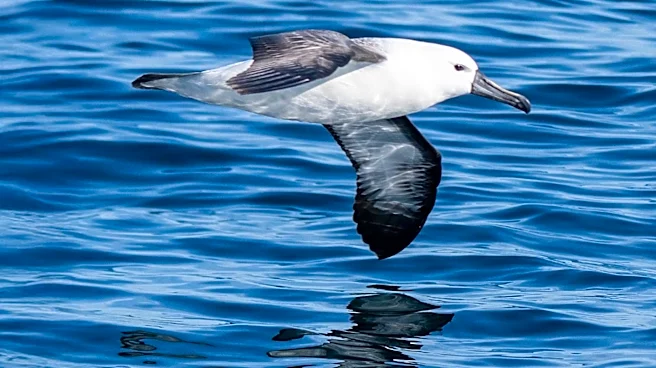
Ocean City, New Jersey, has implemented a unique solution to combat aggressive seagulls on its boardwalk: employing trained falcons and other raptors. This initiative, managed by East Coast Falcons, aims to scare away gulls that have become a nuisance,
often snatching food from tourists. The program, which began in 2019, involves falconers patrolling the boardwalk daily from Memorial Day to Labor Day with birds of prey like falcons and hawks. These raptors are primarily used to intimidate and disperse the gulls, though occasional kills do occur. The city had previously tried various methods, including loud noises, fishing line, and plastic owls, but none proved effective against the thousands of gulls that would flock to the area. The current contract with East Coast Falcons runs through 2029, with the city paying $369,996 for this year's services.
Why It's Important?
This innovative approach highlights a growing challenge for coastal communities dealing with wildlife-human interactions, particularly in tourist-heavy areas. The aggressive behavior of seagulls not only detracts from the visitor experience but can also pose public health concerns. Ocean City's decision to invest significantly in falconry demonstrates a commitment to preserving its tourism appeal and ensuring public comfort. The success of this program could serve as a model for other U.S. beach towns facing similar issues, potentially leading to a broader adoption of biological pest control methods. It also underscores the economic impact of such nuisances, as cities are willing to allocate substantial funds to maintain a pleasant environment for visitors, thereby protecting local businesses dependent on tourism.
What's Next?
The program is expected to continue through its current contract, which extends until 2029. If successful, other coastal communities in the U.S. might explore similar falconry-based solutions to manage their seagull populations. The ongoing monitoring of the program's effectiveness and any adjustments to its implementation will be crucial. There may also be increased public discourse regarding the ethics and efficacy of using predatory birds for pest control, especially concerning the occasional killing of seagulls. The city will likely continue to assess the return on investment for this program, weighing its cost against the benefits of improved tourist satisfaction and reduced nuisance complaints.
Beyond the Headlines
Beyond the immediate practical benefits, Ocean City's falconry program touches upon deeper ecological and cultural implications. It represents a modern application of an ancient practice, falconry, to address contemporary urban wildlife challenges. This method offers an alternative to more harmful pest control techniques, aligning with a growing public preference for environmentally conscious solutions. The program also subtly redefines the relationship between humans and urban wildlife, moving from passive deterrence to active, yet non-lethal (in most cases), management through natural predators. This could foster a greater appreciation for raptors and their role in ecosystems, even in developed areas, and potentially influence future urban planning and wildlife management strategies across the U.S.