



What's Happening?
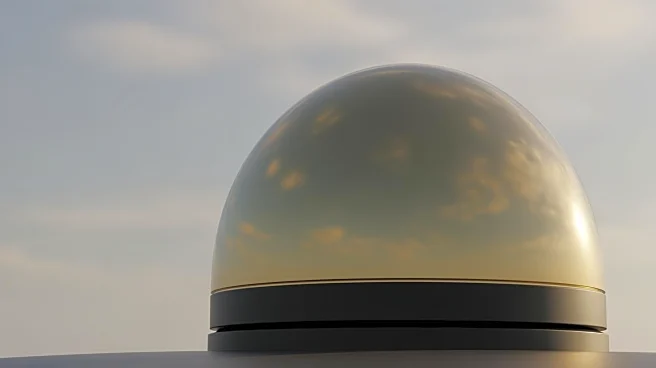
Rep. Jeff Crank, a Republican from Colorado, has expressed frustration over delays in the White House's delivery of a blueprint for the 'Golden Dome' missile defense shield. The initiative, which aims to revolutionize U.S. missile defense, was expected
to have a prototype ready by the end of 2028. Crank, who launched the House Golden Dome Caucus with Rep. Dale Strong, R-Ala., last June, emphasized the importance of adhering to the timeline set by President Trump. The caucus serves as an educational platform for lawmakers and staff to understand the initiative and collaborate with military and industry stakeholders. Despite a classified briefing previewing the architecture, Congress is still awaiting a formal plan to act upon, which was due by the end of 2025.
Why It's Important?
The Golden Dome initiative is significant as it represents a major advancement in U.S. missile defense capabilities. The project, which has garnered interest from nearly 2,500 companies, could involve contracts worth up to $151 billion. The initiative's success is crucial for national security, as it aims to protect U.S. cities from missile threats. However, the delays in delivering a comprehensive plan could hinder progress and raise concerns about the feasibility of meeting the ambitious timeline. The initiative's momentum is also at risk due to competing projects and initiatives from the White House, such as the 'Golden Fleet' battleships. The outcome of this project could have far-reaching implications for U.S. defense policy and international security dynamics.
What's Next?
Moving forward, Congress will need to address several challenges, including policy development around domestic drone flight and counter-drone defense measures, which are integral to the Golden Dome strategy. There is also a possibility of considering a scaled-back version of the project to meet the deadline. The success of the initiative will depend on effective collaboration between Congress, the White House, and industry stakeholders. Additionally, the project requires substantial funding, which only Congress can authorize. The delays highlight the need for a clear and actionable plan to ensure the project's timely execution and effectiveness.