



What's Happening?
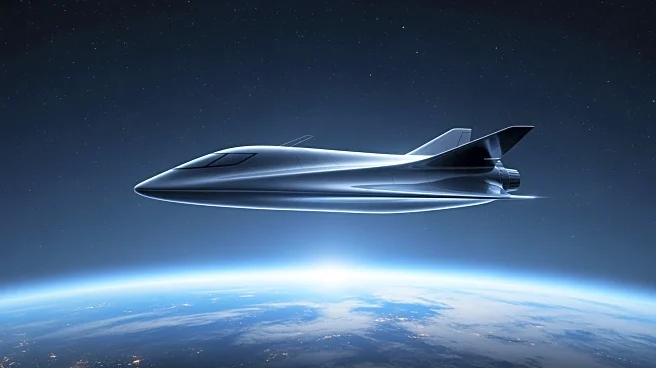
China has launched its experimental reusable spacecraft for the fourth time since 2020, continuing its secretive orbital program. The mission, using a Long March-2F carrier rocket from the Jiuquan Satellite Launch Centre, aims to verify technologies for reusable spacecraft,
potentially mirroring capabilities seen in the U.S. Space Force’s X-37B. Previous missions have involved the release of small satellites or objects, with evidence suggesting rendezvous and proximity operations between the main spacecraft and these payloads. The spacecraft's size and function are comparable to the U.S. X-37B, indicating China's growing capabilities in space technology.
Why It's Important?
China's continued development of reusable spacecraft technology highlights its ambitions to enhance its access to space and develop advanced spaceflight solutions. This program is part of a broader strategy to compete in the global space race, with implications for international space exploration dynamics. The secrecy surrounding these missions raises questions about China's strategic objectives and potential military applications. The U.S. Space Force is expected to monitor the spacecraft's activities, reflecting the geopolitical significance of space technology advancements.
What's Next?
As China continues to develop its reusable spacecraft program, international attention will focus on the spacecraft's future maneuvers, potential deployment of subsatellites, and any rendezvous and proximity operations. The China Aerospace Science and Technology Corporation's plans for a fully reusable, two-stage-to-orbit space transportation system will be closely watched, as it aligns with global trends towards reusable launch systems. The U.S. and other nations will likely respond by enhancing their own space capabilities to maintain competitive parity.