
What's Happening?
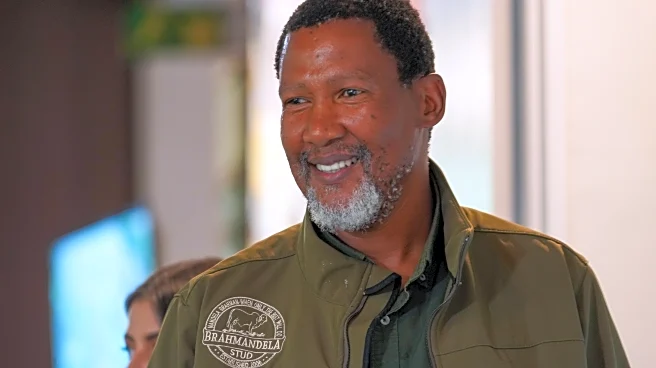
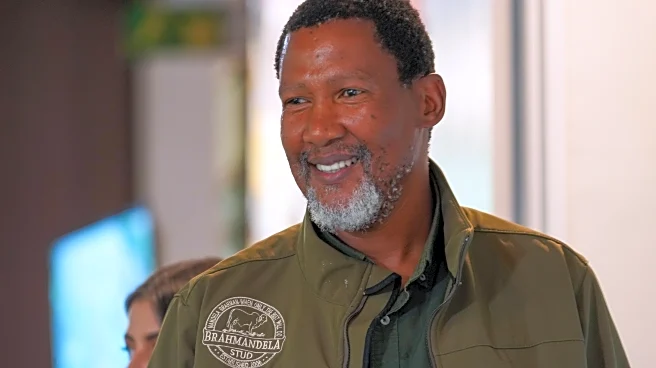
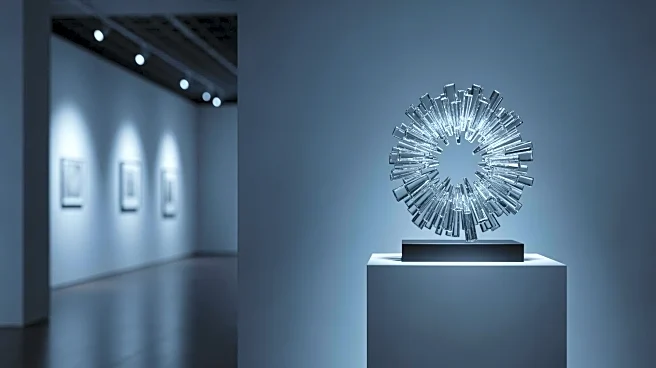
South Africa has withdrawn its submission for the Venice Biennale, which was to feature an artwork commemorating the deaths of women and children in Gaza. The decision was made by South African culture
minister Gayton McKenzie, citing the artwork's divisive nature and its relation to an ongoing international conflict. The artist, Gabrielle Goliath, and curator Ingrid Masondo, who were behind the project, have condemned the move as a violation of freedom of expression. The artwork, part of Goliath's Elegy project, was intended to address various injustices, including those in Gaza. Despite the cancellation, McKenzie assured that South Africa would still participate in the Biennale, though details remain undisclosed.
Why It's Important?
The cancellation raises significant concerns about censorship and the autonomy of artistic expression. It highlights the tension between political considerations and cultural representation, especially in international forums like the Venice Biennale. The decision has been criticized by the selection committee and others in the art community as an abuse of executive authority. This incident underscores the broader issue of how governments may influence or restrict cultural narratives, potentially impacting international perceptions and diplomatic relations.
What's Next?
The future of South Africa's participation in the Venice Biennale remains uncertain, with no clear alternative plan announced. The controversy may prompt further discussions on the role of government in cultural affairs and the protection of artistic freedom. It could also lead to increased scrutiny of South Africa's cultural policies and their alignment with international standards of freedom of expression.
Beyond the Headlines
This incident reflects broader geopolitical dynamics, particularly South Africa's historical support for Palestine, which contrasts with McKenzie's personal stance favoring Israel. The situation may influence South Africa's cultural diplomacy and its relationships with other nations involved in the Biennale. It also raises questions about the balance between national narratives and global artistic discourse.