







What's Happening?
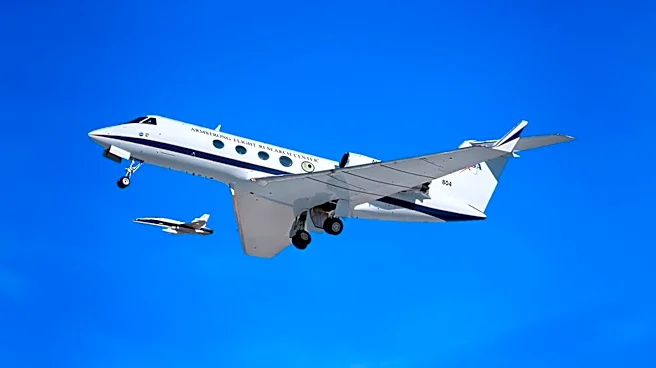
NASA's Armstrong Flight Research Center in Edwards, California, is actively engaged in flight testing to advance aviation technology. Recently, the center focused on the Crossflow Attenuated Natural Laminar Flow (CATNLF) project, which aims to improve
the efficiency of future commercial aircraft by enhancing laminar flow over wing surfaces. This initiative involves testing a scale-model wing attached to a NASA F-15 aircraft. The testing process is a collaborative effort involving pilots, engineers, and researchers who meticulously plan and execute each flight to gather valuable data. The goal is to reduce drag and fuel consumption, potentially leading to significant cost savings for airlines.
Why It's Important?
The CATNLF project represents a significant step forward in aviation technology, with the potential to revolutionize the commercial airline industry. By improving laminar flow, the project aims to reduce drag on aircraft wings, leading to lower fuel consumption and operational costs. This advancement could have a substantial economic impact, benefiting airlines by reducing expenses and potentially lowering ticket prices for consumers. Additionally, the environmental benefits of reduced fuel consumption align with global efforts to decrease carbon emissions and combat climate change. The success of this project could set a precedent for future innovations in aircraft design and efficiency.
What's Next?
Following the initial testing phases, NASA will analyze the data collected to refine the CATNLF wing design further. The insights gained will inform subsequent tests and potential modifications to enhance performance. If successful, the technology could be integrated into new aircraft designs, prompting collaboration with commercial manufacturers. The aviation industry and regulatory bodies will likely monitor these developments closely, as the implications for fuel efficiency and environmental impact are significant. Future steps may include broader testing with different aircraft models and eventual implementation in commercial fleets.