



What's Happening?
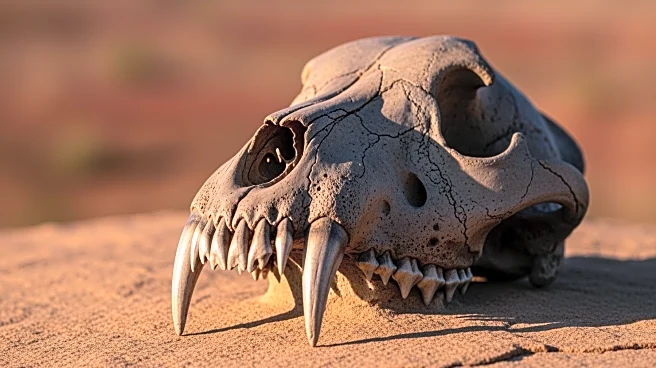
Researchers have identified a new species of large-bodied gorgonopsian, Jirahgorgon ceto, from the middle Permian in South Africa. This discovery challenges previous beliefs about the evolution of body size in gorgonopsians, suggesting a previously unrecognized
diversity within the clade. The fossil was found in the Abrahamskraal Formation and scanned using synchrotron X-ray micro-computed tomography, revealing detailed anatomical features. The study, published in The Anatomical Record, indicates that large-bodied gorgonopsians evolved earlier than previously thought, overturning notions of linear body size evolution.
Why It's Important?
The discovery of Jirahgorgon ceto provides new insights into the evolutionary history of gorgonopsians, early relatives of mammals and top land predators. It suggests that increases in body size occurred independently multiple times within the group, highlighting the complexity of evolutionary processes. This finding contributes to the understanding of predator-prey dynamics and ecological specialization in ancient ecosystems. It also emphasizes the importance of fossil evidence in reconstructing evolutionary pathways and the role of advanced imaging techniques in paleontological research.