







What's Happening?
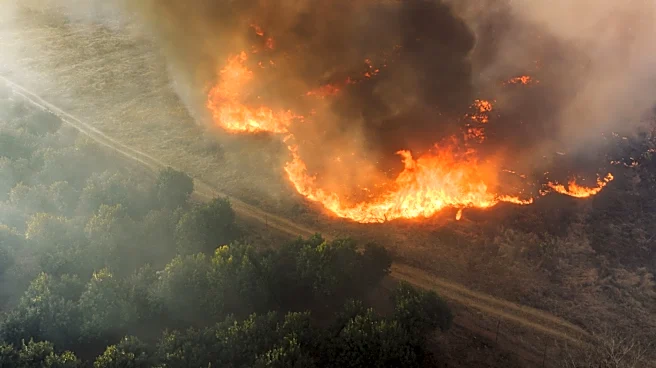
Following the devastating Eaton and Palisades fires in Southern California, researchers from UCLA and UC Davis have discovered that hexavalent chromium, a highly toxic metal, remained in the air for months. This metal, known for its carcinogenic properties,
was found in ultrafine particles capable of penetrating deep into the lungs and bloodstream. The study, published in Nature Communications Earth & Environment, highlights that these particles traveled six to nine miles downwind, potentially exposing 3.4 million people from Santa Monica to Pasadena. The concentration of hexavalent chromium was found to be 137 times higher than the long-term exposure level for residential areas, although it eventually dissipated after eight months.
Why It's Important?
The presence of hexavalent chromium in the air poses significant public health risks, as prolonged exposure can increase cancer risk. This discovery underscores the broader environmental and health impacts of wildfires, which are becoming more frequent and intense due to climate change. The findings raise concerns about the safety of communities downwind of fire-affected areas and highlight the need for improved fire management and air quality monitoring. Additionally, the study suggests a need to reconsider the materials used in household products, as they can release toxic substances when burned.
What's Next?
Researchers are calling for a more detailed investigation to identify the sources of hexavalent chromium and to develop strategies to protect public health in future fire events. This may involve re-evaluating the use of certain materials in consumer products and improving fire retardant formulations. Policymakers and environmental agencies may need to implement stricter regulations and monitoring to mitigate the health impacts of wildfires.
Beyond the Headlines
The study highlights the complex interplay between environmental disasters and public health, emphasizing the need for interdisciplinary approaches to address these challenges. It also raises ethical questions about the responsibility of industries and governments to prevent such toxic exposures and protect vulnerable populations.