


What's Happening?
On September 21, 1962, Russian-born composer Igor Stravinsky made his first return to his homeland in nearly half a century. Having left in 1914 during the reign of Czar Nicholas, Stravinsky found a vastly changed Russia. His music had previously faced
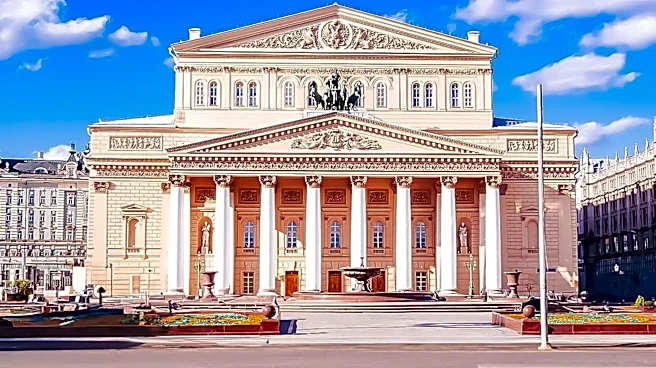
severe criticism within the Soviet Union, with figures like Tikhon Khrennikov, first secretary of the Soviet Composers’ Union, labeling him an 'apostle of reactionary forces in bourgeois music.' Dmitri Shostakovich had also condemned what he called 'the unwholesome influence of Stravinsky' and his 'complete divorce from the true demands of our time.' Despite this historical criticism, Stravinsky's return was described as a profoundly emotional experience. The 80-year-old composer reconnected with old friends he hadn't seen in 50 years and met relatives for the first time. He also met with both Khrennikov and Shostakovich during his visit. Stravinsky conducted the Moscow Symphony in his Symphonic Ode and Orpheus Ballet, and his American assistant, Robert Craft, led the orchestra in Stravinsky's revolutionary 'Rite of Spring,' both performances receiving thunderous applause. For an encore, Stravinsky conducted his 1917 arrangement of the 'Volga Boatmen’s Song.'
Why It's Important?
Stravinsky's return to Russia in 1962 holds significant cultural and political importance, particularly in the context of the Cold War era. His initial departure and subsequent criticism by Soviet authorities highlighted the ideological divide between Western and Soviet artistic expressions. The Soviet Union often viewed modern Western music, including Stravinsky's, as decadent and contrary to socialist realism. His return, therefore, symbolized a potential thawing in cultural relations, even if temporary, and a recognition of his immense artistic legacy by the very system that had once denounced him. For Stravinsky, it was a deeply personal journey to reconnect with his roots and heritage after decades of exile. For the Soviet Union, it offered an opportunity to showcase a more open cultural facade to the world, while also allowing its citizens to experience the work of a globally renowned composer who was a native son. The enthusiastic reception of his performances, particularly 'The Rite of Spring,' demonstrated the enduring power of his music to transcend political barriers and resonate with audiences, regardless of official state narratives. This event underscored the complex interplay between art, politics, and national identity during a period of intense geopolitical tension.
What's Next?
While the immediate impact of Stravinsky's 1962 visit was a powerful cultural exchange and a personal reconciliation for the composer, its long-term effects on Soviet cultural policy were more nuanced. The visit did not immediately lead to a complete liberalization of artistic expression within the Soviet Union, as state control over the arts remained significant. However, it did contribute to a gradual, albeit slow, re-evaluation of previously condemned artists and art forms. Future cultural exchanges and the eventual easing of Cold War tensions would see more Western artists performing in the Soviet bloc and vice versa. For Stravinsky's legacy, the visit solidified his status as a universal figure whose music transcended political boundaries. It also provided a unique historical moment where artistic merit briefly overshadowed ideological differences, paving the way for future generations to appreciate his work without the burden of political condemnation. The event served as a reminder that cultural diplomacy, even in its most challenging forms, can foster understanding and bridge divides.
Beyond the Headlines
Stravinsky's 1962 return to Russia delves into the deeper implications of artistic freedom versus state control, a recurring theme throughout the 20th century. His initial condemnation by Soviet authorities, including prominent figures like Shostakovich (who may have been compelled to parrot the party line), illustrates the immense pressure artists faced under totalitarian regimes. The 'unwholesome influence' and 'divorce from the true demands of our time' accusations were not merely aesthetic judgments but political tools used to enforce ideological conformity. The emotional impact of his return, both for Stravinsky and the Russian public, highlights the profound human need for connection to cultural heritage and the power of art to evoke national identity, even when suppressed. This event also raises questions about the authenticity of artistic criticism under political duress and the potential for reconciliation and re-evaluation over time. It underscores the enduring tension between artistic innovation and traditional or state-sanctioned forms, and how these dynamics play out on a global stage, influencing not just cultural policy but also international relations. The thunderous applause for 'The Rite of Spring' in Moscow, a work once deemed 'bourgeois,' speaks volumes about the resilience of artistic expression and the public's capacity to embrace it, regardless of official pronouncements.