











What's Happening?
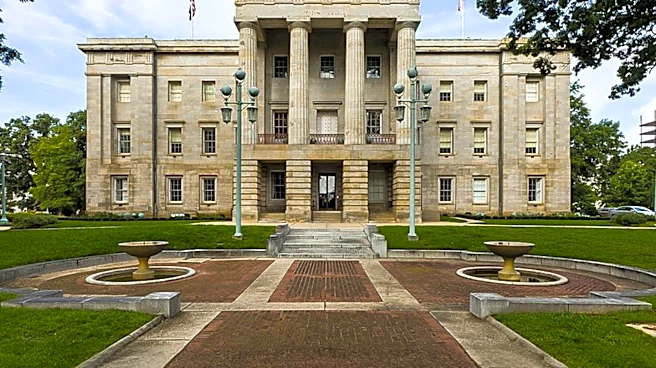
North Carolina lawmakers have introduced a state budget proposal aimed at increasing pay for educators and state employees, while also providing new funding for community colleges. The proposal, which is pending legislative approval, includes an average
8% salary increase for teachers and a 3% raise for most state employees, along with one-time bonuses. A significant component of the budget is the full funding of 'Propel NC,' a new community college funding model that incentivizes schools to train students in high-demand careers rather than focusing solely on enrollment numbers. Durham Technical Community College President JB Buxton highlighted that this model would enhance programs linked to the region's expanding industries, such as life sciences, healthcare, and skilled trades. The budget is set to be voted on by the House and Senate, and if approved, it will be sent to Governor Josh Stein for review.
Why It's Important?
The proposed budget is crucial as it addresses key areas of workforce development and economic growth in North Carolina, particularly in the Durham region. By increasing salaries for educators and state employees, the budget aims to improve job satisfaction and retention in these sectors. The focus on community colleges and high-demand career training aligns with the needs of local industries, potentially leading to a more skilled workforce that can support economic expansion. This initiative could attract more businesses to the area, boosting the local economy and providing more job opportunities. Governor Stein's emphasis on scrutinizing the budget for investments in education, public safety, and mental health underscores the broader societal impact of these financial decisions.
What's Next?
The North Carolina House and Senate are scheduled to vote on the budget proposal. If it passes both chambers, it will be presented to Governor Josh Stein, who has expressed a commitment to thoroughly reviewing the budget to ensure it meets the state's investment needs. The outcome of these votes will determine the immediate future of funding for education and workforce development in the state. Stakeholders, including educators, state employees, and community college leaders, are likely to closely monitor the legislative process and advocate for the budget's approval.