




What's Happening?
The Department of Energy’s SLAC National Accelerator Laboratory is actively seeking partnerships to advance its work in scientific discovery and national security. SLAC, originally the Stanford Linear Accelerator Laboratory, was established in 1962 for particle
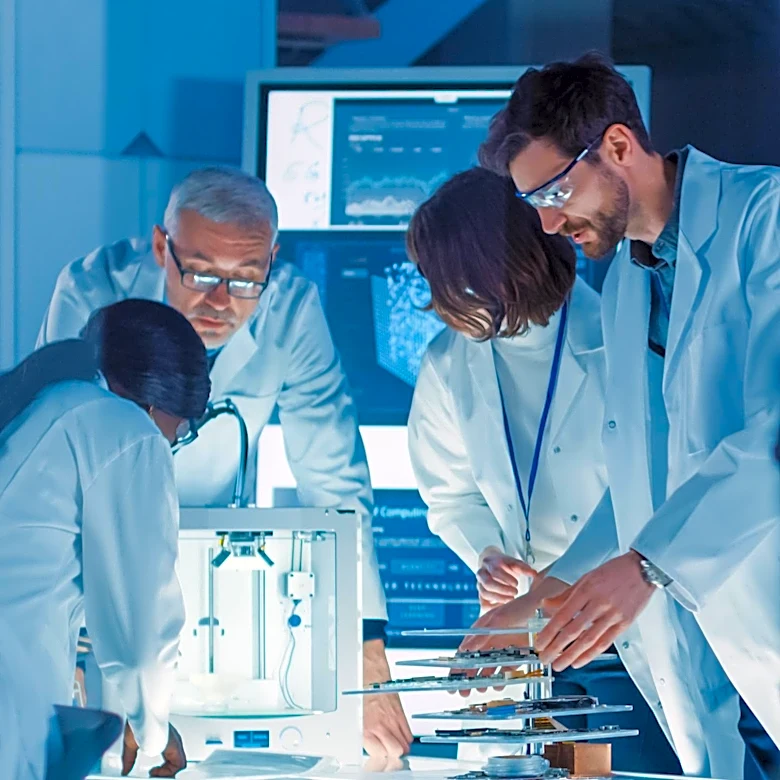
physics research and has since expanded its focus to a broad range of scientific endeavors. Lisa Bonetti, associate lab director for SLAC’s Technology Innovation Directorate (TID), explained that the lab develops cross-cutting new technologies essential for the DOE and the nation. These technologies include instruments that enable researchers to observe phenomena previously undetectable, such as accelerators, X-ray sources, detectors, cameras, and readout electronics. The TID's scientists and engineers are involved in developing technology for nearly every area of SLAC science, from next-generation particle accelerators to computational infrastructure. Mark Kemp, TID’s deputy associate lab director, noted that many technologies pioneered at SLAC have been adopted by other scientific facilities.
Why It's Important?
SLAC's pursuit of partnerships is crucial for advancing U.S. scientific capabilities and national security. The laboratory's focus on extreme environment instrumentation, capable of operating under high radiation, cryogenic temperatures, and high electric fields, directly parallels the needs of defense and space electronics. This collaboration potential means that advancements in basic scientific research at SLAC can have direct applications in critical national security technologies, enhancing the country's defense infrastructure and technological superiority. By developing instruments that push the boundaries of what can be observed and measured, SLAC contributes to foundational scientific discoveries that can lead to unforeseen technological breakthroughs across various sectors. The sharing of these technologies with other scientific facilities further amplifies their impact, fostering a broader ecosystem of innovation and scientific progress within the U.S.
Beyond the Headlines
The work at SLAC highlights a deeper synergy between fundamental scientific research and practical applications, particularly in national security. The lab's emphasis on developing instrumentation for extreme environments underscores the increasing demand for robust and reliable technology in challenging operational contexts, from deep space exploration to advanced military systems. This approach suggests a model where government-funded research institutions serve as incubators for technologies that have dual-use potential, benefiting both pure science and strategic national interests. The historical precedent of SLAC-invented technologies being adopted elsewhere indicates a continuous cycle of innovation and dissemination, reinforcing the U.S.'s position at the forefront of scientific and technological advancement. This collaborative model is vital for addressing complex global challenges and maintaining a competitive edge.