








What's Happening?
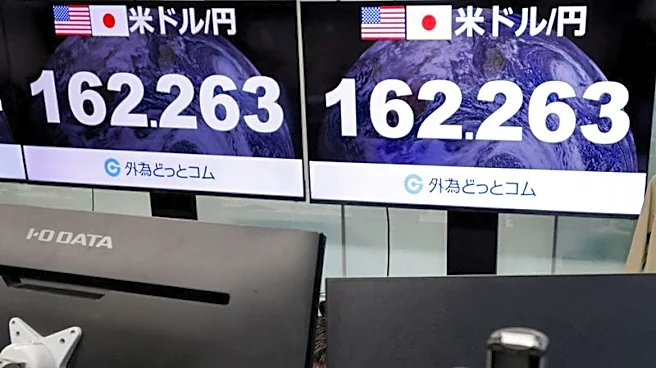
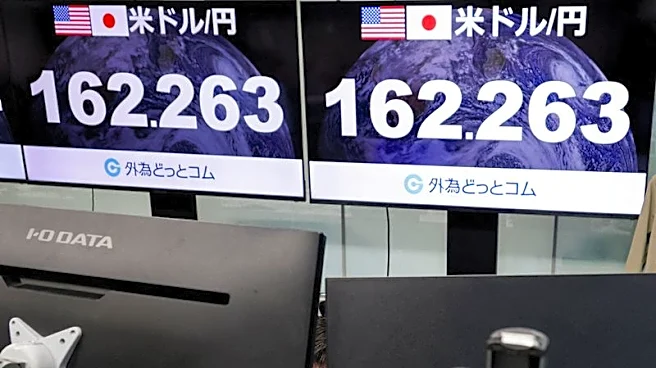
Japan and the United States have jointly intervened in the currency market to support the yen, following the Bank of Japan's decision to hold its policy rate at 1%. This marks the first coordinated effort between the two countries to strengthen the yen since
1998. The intervention aims to counter excessive volatility and disorderly currency movements. Japan's Ministry of Finance, in coordination with the US Treasury, purchased yen to stabilize the currency. This move comes as the Federal Reserve maintains its interest rates amid persistent inflation and strong domestic demand in the U.S.
Why It's Important?
The joint intervention by Japan and the U.S. is significant as it underscores the importance of international cooperation in maintaining currency stability. For the U.S., a stable yen is crucial for trade relations and economic stability in the Asia-Pacific region. The intervention also highlights the challenges faced by central banks in managing monetary policy amid global economic uncertainties. The decision to support the yen reflects broader concerns about currency volatility and its potential impact on global markets.
What's Next?
Future interventions may be necessary if currency volatility persists. The U.S. and Japan may continue to collaborate on monetary policy to ensure economic stability. The effectiveness of these interventions will depend on the interest rate differentials between the two countries and the Bank of Japan's future policy decisions. Market participants will closely watch for any signals of further tightening by the Bank of Japan, which could influence currency movements.
Beyond the Headlines
The intervention also highlights the interconnectedness of global financial markets and the potential ripple effects of currency fluctuations. It raises questions about the long-term sustainability of such interventions and the role of central banks in managing economic stability. The situation underscores the need for coordinated international efforts to address economic challenges and maintain financial stability.