




What's Happening?
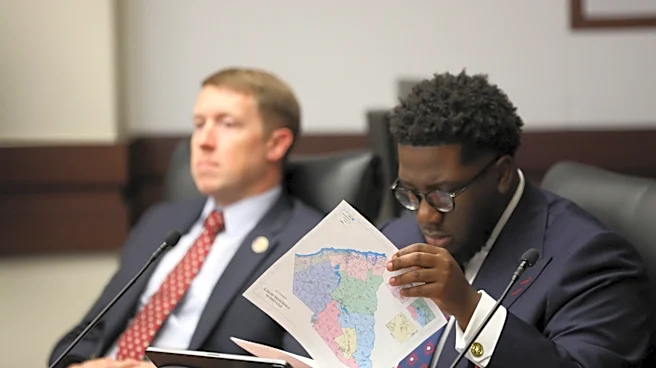
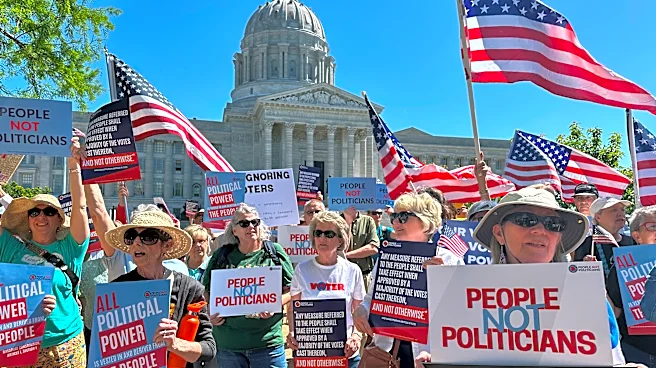
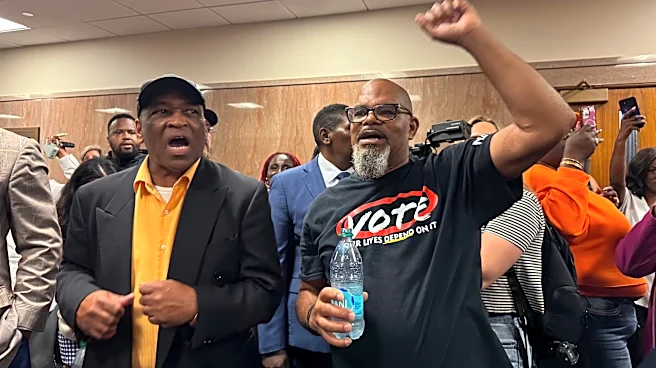
South Carolina Governor Henry McMaster has called a special legislative session to redraw the state's congressional map, aiming to eliminate its only majority-Black district. This decision follows a failed attempt by the state Senate to reconvene for
redistricting, which required a two-thirds majority vote. The move comes amid absentee voting for the state's June 9 primary election, with over 9,000 ballots already distributed. The proposed redistricting plan, reportedly influenced by President Trump's administration, has faced criticism for its rushed timeline and potential to create voter confusion. Local officials, including Charleston Mayor William Cogswell and Mount Pleasant Mayor Will Haynie, have urged a more deliberate approach, emphasizing the need for a principled process.
Why It's Important?
The redistricting effort in South Carolina is significant as it could reshape the political landscape by potentially reducing African American representation in Congress. The elimination of the majority-Black district could impact voter turnout and influence election outcomes, particularly for the Democratic Party. Critics argue that the rushed process undermines democratic principles and could lead to increased political polarization. The decision also highlights ongoing national debates over gerrymandering and its implications for fair representation. The outcome of this redistricting could set a precedent for similar actions in other states, affecting national political dynamics.
What's Next?
As lawmakers reconvene, they face the challenge of addressing the logistical issues posed by the ongoing primary election. Proposals to delay the congressional primary to August are under consideration, which could incur additional costs and voter confusion. The redistricting plan's approval process will likely involve intense political negotiations and potential legal challenges. Stakeholders, including civil rights groups and political parties, are expected to closely monitor developments and may take action to influence the outcome. The situation could also prompt increased voter mobilization efforts, particularly among African American communities.