








What's Happening?
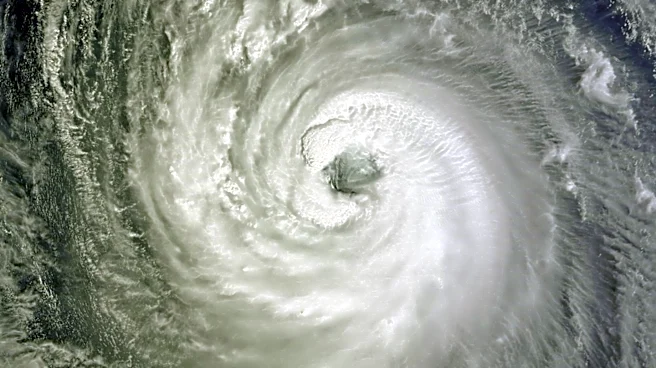
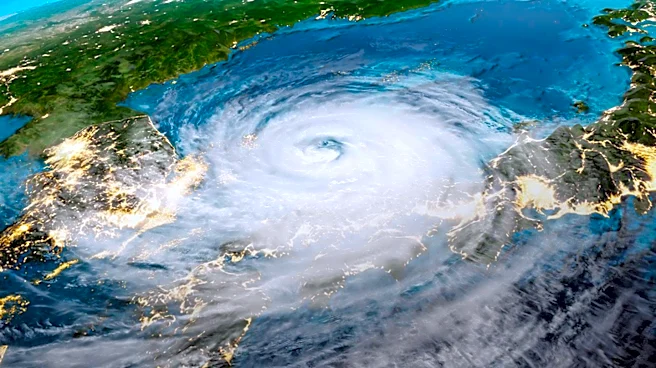
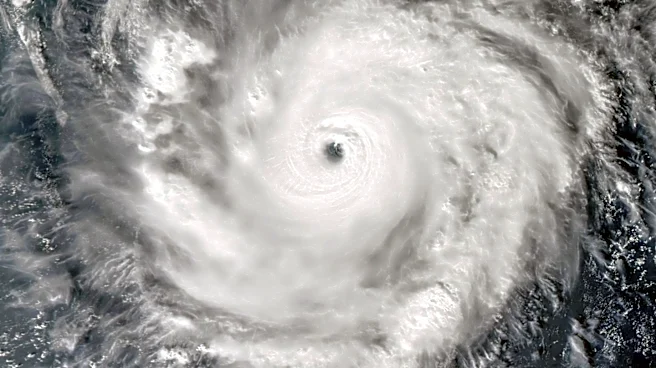
Delta Air Lines has canceled flights as Typhoon Bavi, now weakened to a tropical storm, continues to affect China with strong winds and heavy rain. The storm initially made landfall in eastern China's Zhejiang province and has caused significant disruptions,
including the cancellation of approximately 653 flights at Shanghai's Pudong International Airport and Hongqiao International Airport. The typhoon has led to the evacuation of over 2.2 million people in Zhejiang province and has caused damage such as uprooting more than 1,300 trees in the coastal city of Yueqing. The storm's impact extends beyond China, as it initially hit the Northern Mariana Islands in the western Pacific Ocean, causing severe weather conditions.
Why It's Important?
The cancellation of flights by Delta Air Lines due to Typhoon Bavi highlights the vulnerability of global transportation networks to extreme weather events. Such disruptions can have cascading effects on international travel and logistics, affecting passengers and cargo operations. The storm's impact on major airports in China underscores the challenges faced by airlines in maintaining schedules during natural disasters. Additionally, the evacuations and damage caused by the typhoon reflect the broader implications of climate-related events on infrastructure and public safety. The situation emphasizes the need for robust disaster preparedness and response strategies in regions prone to such weather phenomena.
What's Next?
As Typhoon Bavi continues to move northwestward, further disruptions in air travel and local infrastructure are possible. Authorities in affected regions are likely to focus on recovery efforts, including restoring services and addressing the needs of displaced populations. Airlines, including Delta, may need to adjust their operations and schedules in response to ongoing weather conditions. The situation may prompt discussions on enhancing resilience and adaptive measures in the face of increasing frequency and intensity of such storms, potentially influencing future policy and planning in the aviation and transportation sectors.