



What's Happening?
The North Charleston Police Department has arrested Erimateo Ramirez Mendez, 31, on charges of driving under the influence (first offense), leaving the scene of a collision with an attended vehicle, and failure to stop for blue lights. The incident occurred
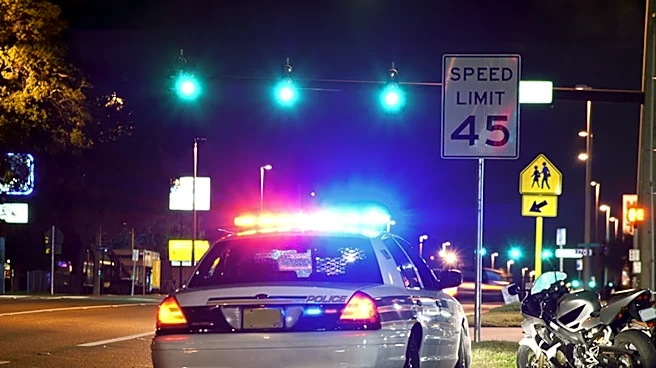
around 3:40 p.m. at the Walmart in the 7400 block of Rivers Avenue. Officers responded to a report of a vehicle collision and found Mendez, who was involved in the crash. An officer observed Mendez rear-end a pickup truck and then attempt to leave the scene, hitting a curb in the process. Despite being followed by a police vehicle with activated blue lights, Mendez continued driving before being stopped and taken into custody. Police noted a strong odor of alcohol from Mendez, and he subsequently agreed to perform field sobriety tests. Based on these observations, officers determined there was probable cause to believe he was impaired and driving under the influence. Mendez was booked into the Al Cannon Detention Center, where he provided a breath test sample of 0.09% nearly two hours after the collision, following medical clearance.
Why It's Important?
This incident highlights the ongoing public safety concerns related to impaired driving and hit-and-run incidents in communities like North Charleston. Driving under the influence poses significant risks to both the driver and other road users, often leading to serious injuries or fatalities. The additional charge of leaving the scene of a collision further exacerbates the potential consequences, as it can delay aid to injured parties and complicate investigations. The police department's swift response and subsequent arrest underscore their commitment to enforcing traffic laws and ensuring accountability for dangerous driving behaviors. Such arrests serve as a deterrent, reinforcing the message that impaired driving will not be tolerated and that individuals who attempt to evade responsibility for collisions will face legal repercussions. The legal process that follows will determine the specific penalties for Mendez, which could include fines, license suspension, and potential jail time, reflecting the severity of the offenses.
What's Next?
Erimateo Ramirez Mendez will face legal proceedings in connection with the charges of driving under the influence, leaving the scene of a collision with an attended vehicle, and failure to stop for blue lights. He has been booked into the Al Cannon Detention Center, and his case will proceed through the judicial system. This will likely involve court appearances, where he will have the opportunity to enter a plea. The evidence collected by the North Charleston Police Department, including the officer's observations, the breath test results, and witness accounts, will be presented. The outcome of the case could include various penalties, such as fines, mandatory participation in DUI education programs, suspension or revocation of his driver's license, and potential incarceration, depending on the court's decision and any prior offenses. The incident may also prompt further public awareness campaigns regarding the dangers of impaired driving in the North Charleston area.
Beyond the Headlines
Beyond the immediate legal consequences for Erimateo Ramirez Mendez, this incident underscores broader societal challenges related to alcohol consumption and responsible driving. The fact that the incident occurred in a public area like a Walmart parking lot during daylight hours (around 3:40 p.m.) suggests a potential disregard for public safety and the law. The attempt to flee the scene and failure to stop for blue lights further indicate a pattern of behavior that could have led to more severe outcomes. This event may also prompt discussions within the community about the effectiveness of current enforcement strategies and public education initiatives aimed at preventing impaired driving. It highlights the critical role of law enforcement in maintaining order and safety on the roads, as well as the importance of individual responsibility in preventing such incidents. The long-term implications for Mendez could extend beyond legal penalties, affecting his employment, personal relationships, and overall quality of life.