



What's Happening?
A nationwide ground stop ordered by the Federal Aviation Administration (FAA) on Friday, November 13, 2026, halted all departing flights across the United States. The FAA cited 'extraordinary circumstances and safety' due to air traffic control communication
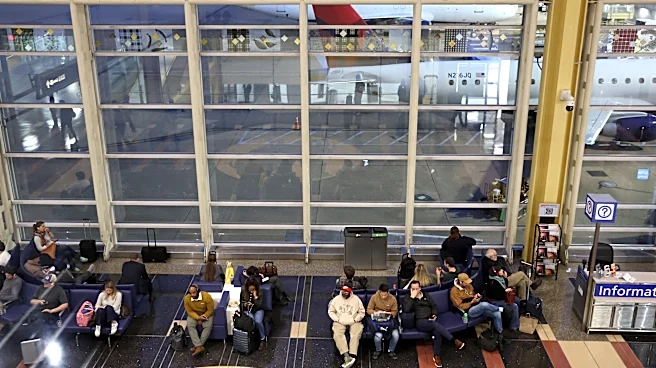
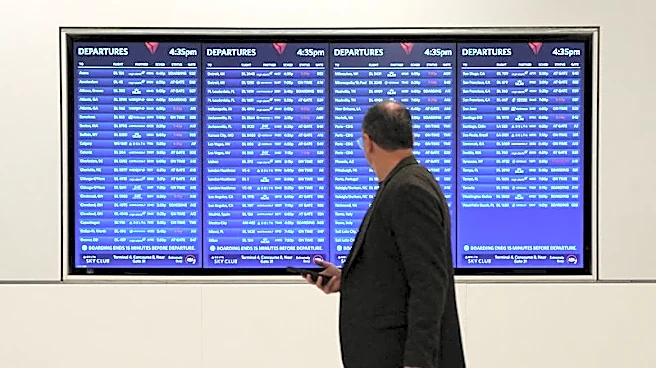
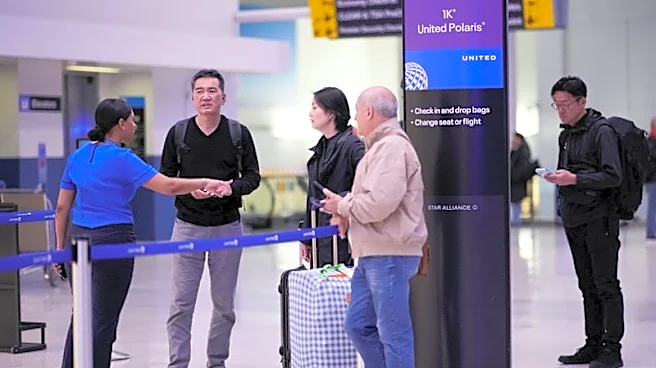
issues. Flights already in the air were permitted to land, while international flights were handled on a case-by-case basis. This event marks the third time all U.S. departures have been grounded, following incidents on September 11, 2001, and January 11, 2023, when a pilot notification system malfunctioned. The disruption caused widespread delays, cancellations, and missed connections, leaving hundreds of thousands of passengers stranded and seeking information. Travelers are advised to consult their airline's app or website for the most current flight status.
Why It's Important?
The FAA ground stop underscores the fragility of the national air travel infrastructure and its susceptibility to technical failures. Such widespread disruptions have significant economic consequences, impacting not only airlines and airports but also businesses and individuals reliant on timely air travel. The incident highlights the critical role of robust communication systems in maintaining air safety and operational efficiency. For passengers, the event brings to the forefront their rights regarding refunds for canceled flights, as outlined by the U.S. Department of Transportation, even for nonrefundable tickets. However, it also clarifies that airlines are not automatically obligated to provide compensation for hotels, meals, or alternative transportation during disruptions outside their control, such as an FAA ground stop, placing a burden on affected travelers.
What's Next?
As the ground stop is lifted, airlines will work to resume operations, but a full return to normal schedules will take time, leading to continued delays and potential cancellations. Passengers whose flights were canceled or significantly delayed may be entitled to a refund if they choose not to travel or accept an alternative, according to DOT guidelines. Travelers should contact their airlines to understand rebooking options, potential additional charges, and whether they can be placed on another carrier. The incident is likely to prompt further scrutiny and calls for investment in modernizing the FAA's air traffic control systems to prevent future occurrences. The U.S. Department of Transportation encourages passengers to file complaints if issues are not resolved directly with airlines.
Beyond the Headlines
This event exposes the broader societal impact of critical infrastructure failures, extending beyond immediate travel inconveniences to affect personal plans, business operations, and supply chains. The lack of automatic compensation for passengers during such events, even when the disruption is not the airline's fault, highlights a gap in consumer protection policies that could be re-evaluated. The incident also serves as a stark reminder of the interconnectedness of modern systems; a technical glitch in one area can rapidly escalate into a national crisis. It may also spur discussions on the role of government agencies in providing clearer, more timely communication to the public during emergencies, as well as the need for contingency plans that minimize passenger hardship during unforeseen disruptions.