
What's Happening?
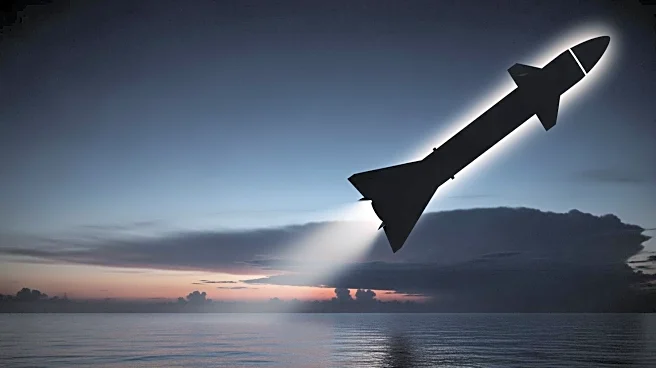
Russian Foreign Minister Sergey Lavrov has expressed significant concern regarding the presence of the U.S. Typhon missile system in Japan. This deployment is part of a broader military cooperation between
the United States and Japan, aimed at countering regional threats, particularly from China and North Korea. The Typhon system, capable of launching Tomahawk cruise missiles, was initially deployed for military exercises but is perceived by Russia as a potential permanent fixture. The Japanese Defense Ministry previously indicated that the deployment was temporary, yet Russia remains skeptical, fearing a strategic encirclement. This development is part of a larger geopolitical tension involving NATO's interest in the Asia-Pacific region, driven by the strategic partnership between China and Russia.
Why It's Important?
The deployment of the Typhon missile system in Japan underscores the escalating military tensions in the Asia-Pacific region. For the United States, this move is a strategic effort to reassure allies and counterbalance China's growing military capabilities. However, for Russia, it represents a direct threat, potentially destabilizing regional security dynamics. The situation highlights the complex interplay of military alliances and the potential for increased militarization in the region. This could lead to a shift in U.S. military resources, affecting its ability to respond to threats in Europe, particularly concerning NATO's defense posture against Russia.
What's Next?
The ongoing presence of the Typhon system in Japan may lead to further diplomatic engagements between the involved nations. Russia is likely to continue voicing its concerns, potentially seeking diplomatic or strategic countermeasures. The U.S. and Japan may need to clarify the system's status to mitigate tensions. Additionally, the situation could prompt China to enhance its military readiness, further complicating regional security. The international community will be closely monitoring these developments, as they could influence broader geopolitical alignments and military strategies.