






What's Happening?
State Senator Mallory McMorrow has announced that she will not endorse any candidate in the Democratic U.S. Senate primary in Michigan after withdrawing from the race. McMorrow, who represents Royal Oak, stated her intention to support whoever becomes
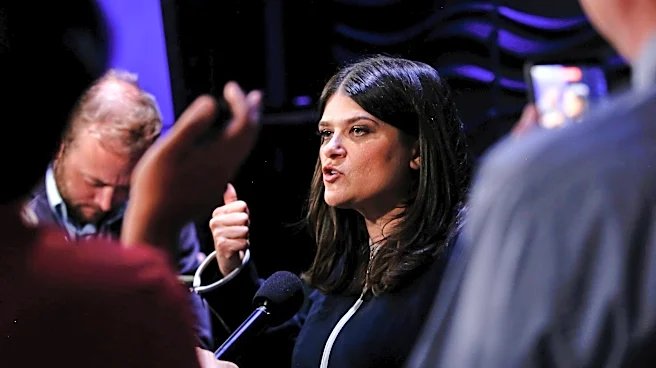
the nominee following the primary on August 4. Her decision comes after she fell behind in public polling to Abdul El-Sayed, a former Wayne County health official favored by progressives, and U.S. Representative Haley Stevens, who has gained significant support through extensive TV advertising. Both El-Sayed and Stevens have acknowledged McMorrow's contributions to the race, with Stevens calling her a dedicated public servant and El-Sayed appreciating her campaign's stance against corporate and political influence.
Why It's Important?
McMorrow's decision not to endorse could significantly influence the dynamics of the Michigan Senate primary, a race expected to be closely contested. Her endorsement might have swayed undecided voters, given her political standing and the respect she commands within the party. The primary is crucial as it determines the Democratic candidate who will compete for a Senate seat, potentially affecting the balance of power in the U.S. Senate. The race also highlights broader themes in Democratic politics, such as the influence of corporate money and political action committees, which have been focal points in El-Sayed's campaign.
What's Next?
As the primary approaches, both El-Sayed and Stevens will continue to campaign vigorously to secure votes. The absence of McMorrow's endorsement means that both candidates will need to appeal directly to her supporters to gain an edge. The outcome of the primary will set the stage for the general election, where the Democratic nominee will face a Republican opponent. The race will likely attract national attention, given its potential implications for Senate control.