
What's Happening?
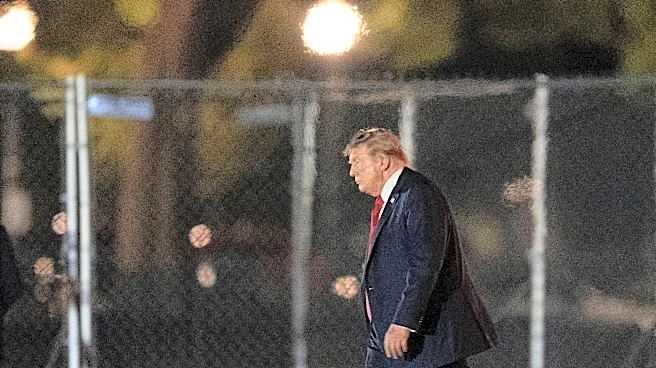
President Donald Trump has proposed capping credit card interest rates at 10% as part of his strategy to address the "affordability crisis." This proposal, along with New York City Mayor Zohran Mamdani's rent freeze scheme, represents a populist approach
to economic issues. A recent CBS News poll indicates broad public support for price controls, with 75% of Democrats, 62% of independents, and 54% of Republicans in favor of government-imposed limits on costs. However, critics argue that such measures interfere with market mechanisms. The banking industry estimates that President Trump's proposed interest rate cap could cut off as many as 159 million Americans from credit cards, suggesting a significant reduction in available credit, particularly for riskier borrowers.
Why It's Important?
The debate over price controls, including President Trump's proposed credit card interest rate cap, is significant because it highlights a fundamental disagreement on economic policy and the role of government in the economy. Proponents argue that such caps protect consumers from high costs and address affordability issues. However, critics contend that price controls distort market signals, leading to unintended consequences like shortages. In the case of credit cards, capping interest rates could reduce the incentive for lenders to offer credit, especially to individuals perceived as higher risk, potentially limiting access to credit for a large segment of the population. This could disproportionately affect those who rely on credit cards for emergencies or to manage cash flow, exacerbating financial difficulties for some while aiming to alleviate them for others.
What's Next?
The proposal for capping credit card interest rates is likely to remain a key point of discussion in political discourse, especially as the "affordability crisis" continues to be a prominent concern for voters. If President Trump's proposal gains further traction, it could lead to legislative efforts to implement such caps, sparking intense debate between consumer advocates, the financial industry, and economists. The banking industry will likely continue to lobby against such measures, citing potential negative impacts on credit availability and the broader economy. The popularity of price controls among the public suggests that politicians will continue to explore similar populist economic policies, regardless of warnings from free-market advocates.
Beyond the Headlines
The discussion around credit card interest rate caps and price controls delves into deeper philosophical questions about economic freedom versus government intervention. It reflects a growing public desire for immediate solutions to economic hardships, even if those solutions are viewed by some as economically unsound in the long term. The historical precedent of President Richard Nixon's wage and price freeze in 1971, which economists largely agree worsened inflation, serves as a cautionary tale. This ongoing debate underscores the challenge for free-market advocates to effectively communicate the long-term benefits of market-driven solutions against the immediate appeal of government-mandated price reductions. The outcome of this policy debate could significantly reshape the financial landscape for millions of Americans and influence future approaches to economic regulation.