





What's Happening?
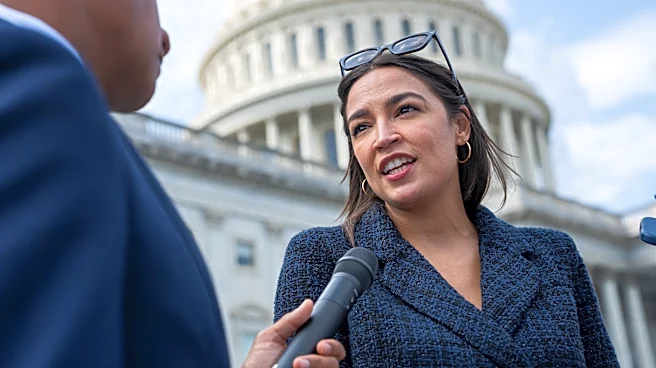
Representative Alexandria Ocasio-Cortez has voiced her opposition to the BUSES Act during a House Committee Markup. The proposed bill aims to block the enforcement of bus engine-idling restrictions under 15 minutes and terminate a resident reporting program.
Ocasio-Cortez argues that this measure could significantly worsen air quality and increase pollution exposure for children, particularly in areas like the South Bronx. She advocates for local governments to retain the authority to establish their own regulations based on specific local conditions. Furthermore, she has proposed an amendment requiring EPA certification before the bill could be implemented. This stance aligns with her broader legislative efforts, which include proposals such as the Green New Deal for Public Housing Act and the Artificial Intelligence Data Center Moratorium Act. Her office recently disclosed $1.5 million in fundraising during Q2, primarily from individual donors, and reported $1.5 million in spending for the same period.
Why It's Important?
The opposition to the BUSES Act highlights a critical debate regarding environmental protection, public health, and local governance in the United States. If passed, the bill could undermine local efforts to combat air pollution, potentially leading to adverse health outcomes for communities, especially vulnerable populations like children. The proposed federal preemption of local idling restrictions could set a precedent, limiting the ability of cities and states to address environmental concerns tailored to their specific needs. This issue also underscores the ongoing tension between federal regulatory power and local autonomy. For industries, a lack of consistent environmental regulations across different localities could create an unpredictable operating environment, while environmental groups and public health advocates would likely view the bill as a significant setback. The debate also reflects the growing influence of progressive lawmakers like Ocasio-Cortez in shaping environmental policy discussions and advocating for community-level protections.
What's Next?
The BUSES Act will continue through the legislative process within the House Committee, where Ocasio-Cortez's proposed EPA certification requirement and other amendments will be considered. The outcome of this markup will determine if the bill advances to a full House vote. Stakeholders, including environmental organizations, public health advocates, and transportation industry lobbyists, are expected to intensify their efforts to influence the bill's trajectory. Local governments and community groups in affected areas, such as New York City, will likely continue to pressure their representatives to oppose measures that could compromise local air quality standards. The debate surrounding the BUSES Act could also become a talking point in upcoming elections, with candidates taking positions on federal versus local control over environmental regulations. The broader implications for future environmental legislation and the balance of power between federal and local authorities will be closely watched.
Beyond the Headlines
The controversy surrounding the BUSES Act extends beyond immediate environmental and health concerns, touching upon fundamental questions of federalism and the role of local communities in self-governance. The push to override local idling restrictions could be seen as part of a larger trend where federal legislation seeks to standardize regulations, potentially at the expense of local specificities and community-driven initiatives. This raises ethical considerations about who bears the burden of environmental degradation and who has the authority to mitigate it. Culturally, the debate reflects differing philosophies on environmental responsibility and economic development. While proponents of the bill might argue for streamlined regulations to support commerce, opponents emphasize the intrinsic right of communities to a healthy environment. The long-term shift could see increased legal challenges from local entities against federal preemption, further complicating the regulatory landscape and potentially leading to a more fragmented approach to environmental policy across the nation.