






What's Happening?
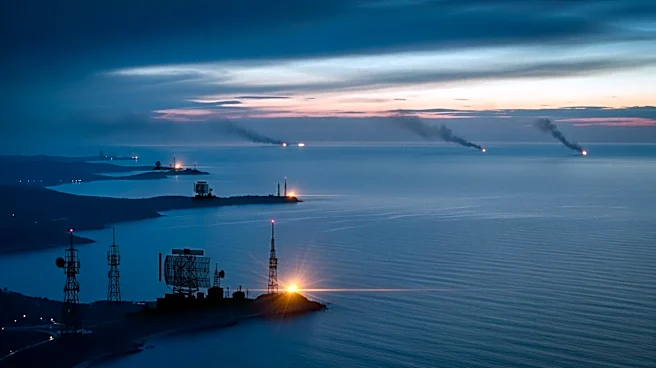
Iran and Russia are leveraging the Caspian Sea as a strategic route to bypass international sanctions and enhance military cooperation. The Caspian Sea has become a vital trade corridor, allowing the transfer of goods, including Russian drone components
to Iran. This route is less susceptible to U.S. intervention due to its geographical and political constraints. The increased traffic of 'dark ships'—vessels that disable tracking systems—indicates covert operations. The Caspian Sea's strategic importance has grown as Iran seeks alternative trade routes amid U.S. naval blockades in the Strait of Hormuz.
Why It's Important?
The use of the Caspian Sea for sanctions evasion highlights the challenges in enforcing international sanctions against Iran and Russia. This development underscores the resilience of both nations in circumventing economic restrictions, potentially undermining U.S. foreign policy objectives. The military cooperation facilitated by this route strengthens Iran's drone capabilities, posing a strategic challenge to U.S. interests in the Middle East. The situation also reflects broader geopolitical shifts, with Russia and Iran deepening ties in response to Western pressure.
Beyond the Headlines
The Caspian Sea's role in sanctions evasion raises ethical and legal questions about the effectiveness of international sanctions regimes. The covert nature of these operations complicates monitoring and enforcement efforts, highlighting the need for enhanced international cooperation and intelligence sharing. The situation also underscores the geopolitical complexities of the region, where traditional alliances and power dynamics are being reshaped by emerging partnerships between sanctioned states.