






What's Happening?
Craig Rodwell (1940–1993) is being recognized as a pivotal figure in the pre-Stonewall gay rights movement and a key organizer of the first Pride parades. According to journalist John Van Hoesen's biography, 'Insist That They Love You: Craig Rodwell and the Fight
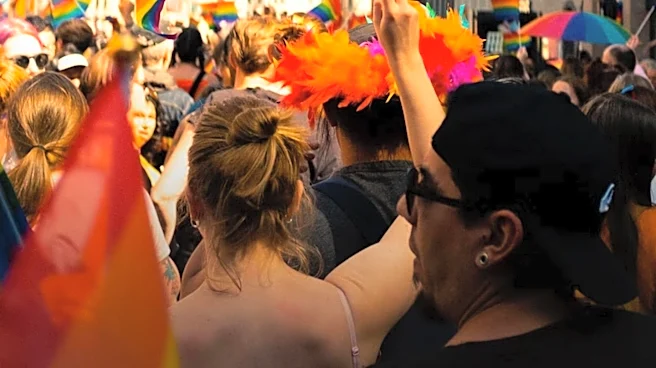
for Gay Pride,' Rodwell's influence was pervasive in the early gay liberation cause. His activism included organizing the East Coast Homophile Organizations in 1963, forming the Mattachine Young Adults, and co-organizing the 'Sip-In protest' in 1966, which challenged laws prohibiting bars from serving homosexuals. Rodwell also founded the Oscar Wilde Memorial Bookshop in 1967, the first bookstore dedicated to gay and lesbian literature, which served as a community hub. Following the Stonewall Riots in 1969, Rodwell proposed and led the organization of Christopher Street Liberation Day, which evolved into the annual gay and lesbian Pride parades.
Why It's Important?
Rodwell's contributions were instrumental in shaping the trajectory of the LGBTQ+ rights movement in the United States. His fearlessness in confronting discrimination, from challenging the Mafia's control of gay bars to using the press to advocate for the movement, laid foundational groundwork. The 'Sip-In protest' was a significant pre-Stonewall action that led to the end of discriminatory practices by the New York State Liquor Authority, creating licensed gay bars as safe gathering places. The Oscar Wilde Memorial Bookshop provided a vital community center and intellectual space for activists. Most notably, his initiative to commemorate the Stonewall Riots with Christopher Street Liberation Day directly led to the establishment of annual Pride parades, which remain powerful symbols of visibility, advocacy, and celebration for the LGBTQ+ community today. His coining of the term 'heterosexism' in 1971 further articulated the systemic bias faced by non-heterosexual individuals.
What's Next?
The renewed focus on figures like Craig Rodwell, through biographies and historical accounts, suggests an ongoing effort to ensure that the foundational history of the LGBTQ+ rights movement is not overlooked. This recognition helps to educate younger generations about the origins of their rights and the sacrifices made by early activists. As Pride parades continue to be celebrated annually, understanding their historical roots in Rodwell's activism reinforces their significance beyond mere celebration, connecting them to a legacy of organized resistance and the pursuit of equality. This historical awareness can inspire continued advocacy and vigilance in the ongoing fight for LGBTQ+ rights and full societal integration.
Beyond the Headlines
Rodwell's story highlights the often-unseen labor and strategic thinking behind major social movements. His refusal of self-aggrandizement and focus on collective action, as noted by Van Hoesen, offers a model of activism that prioritizes the cause over individual recognition. The establishment of the Oscar Wilde Memorial Bookshop as a 'clean, well-lit space' that refused to deal with mob-funded businesses speaks to an ethical dimension of early activism, seeking to build community on principles of integrity and safety. His insistence on 'total integration in a world which must eventually provide equality for all' underscores a vision that extends beyond mere tolerance to full societal acceptance and equal rights, a goal that continues to resonate within the LGBTQ+ community and broader civil rights discourse.