









What's Happening?
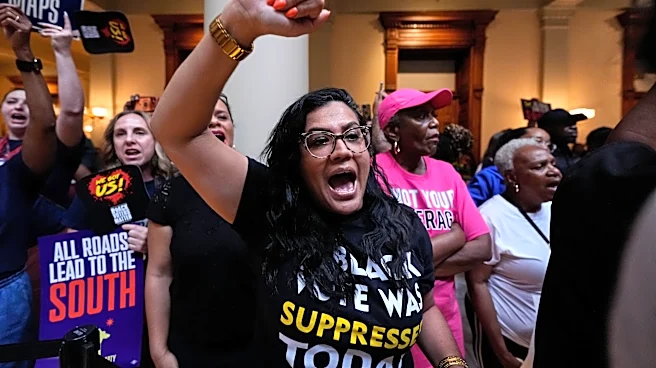
In Georgia, a special legislative session at the Capitol was marked by significant protests and political maneuvering. Hundreds of activists gathered outside the Capitol, voicing their opposition to proposed redistricting plans that they argue would diminish
Black political power. The session, which took place on a Wednesday, was described as a mix of post-runoff hangover and a glimpse into Georgia's political future. The protests were part of a broader movement to restore voting rights, with demonstrators holding signs and chanting against the new maps. Inside the Capitol, Republican leaders unexpectedly retreated from their redistricting efforts, adding to the session's unusual atmosphere. The event also saw faith leaders and demonstrators marching during the Pilgrimage for Voting Rights at Liberty Plaza in Atlanta, highlighting the ongoing struggle for equitable representation in the state.
Why It's Important?
The developments in Georgia are significant as they reflect broader national debates over voting rights and redistricting, which have been contentious issues in recent years. The protests and legislative actions underscore the tensions between efforts to maintain political power and demands for fair representation, particularly for minority communities. The outcome of these redistricting efforts could have lasting impacts on Georgia's political landscape, influencing future elections and the balance of power within the state. The retreat by Republican leaders from their redistricting plans may signal a shift in strategy or acknowledgment of the strong opposition they face. This situation is a microcosm of the national struggle over voting rights, with potential implications for public policy and civil rights advocacy across the United States.
What's Next?
As the situation unfolds, stakeholders will likely continue to engage in legal and political battles over the redistricting process. Activists and civil rights groups may pursue further actions to challenge any maps they view as unfair, potentially leading to court cases or additional legislative sessions. Political leaders in Georgia will need to navigate these challenges while considering the broader implications for their parties and constituents. The outcome of these efforts could influence national discussions on voting rights and set precedents for other states facing similar issues. Observers will be watching closely to see how Georgia's political landscape evolves in response to these developments.