

What's Happening?
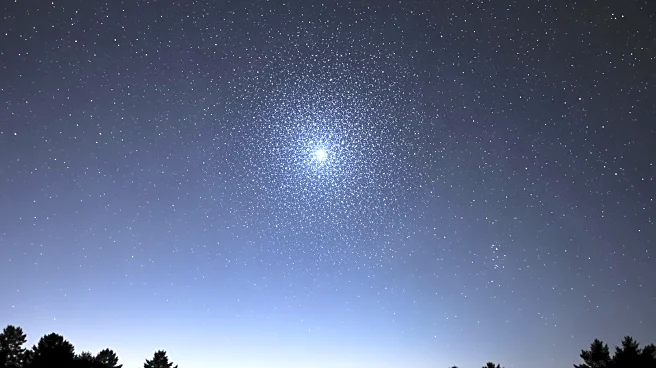
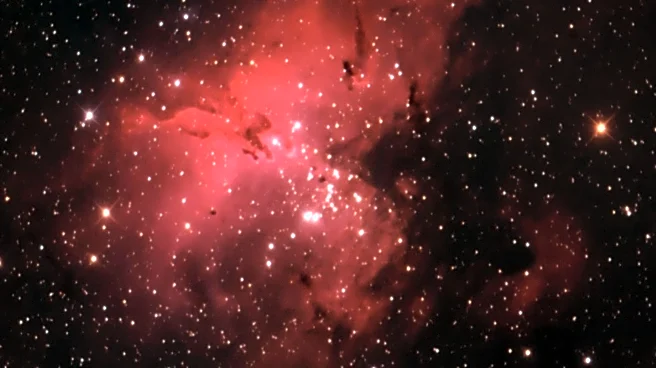
Astronomy enthusiasts are encouraged to observe the Pleiades star cluster before it becomes obscured by the spring sun. The Pleiades, visible from October to March, will soon be lost in the sun's glare and won't reappear until late June. Known for its
distinct haze of light, the cluster is best viewed using averted vision under dark skies. The Pleiades consists of approximately 1,000 stars, with the seven brightest named after figures from Greek mythology. The cluster can be located by following a line from Orion's Belt past the star Aldebaran.
Why It's Important?
The Pleiades is one of the most recognizable and studied star clusters, offering both amateur and professional astronomers a chance to observe stellar formation and evolution. Its visibility marks a seasonal transition in the night sky, providing an opportunity for educational outreach and public engagement in astronomy. Observing the Pleiades can inspire interest in space science and foster a greater appreciation for the universe. The cluster's disappearance and reappearance also serve as a reminder of the dynamic nature of the cosmos and the importance of preserving dark skies for astronomical observation.