





What's Happening?
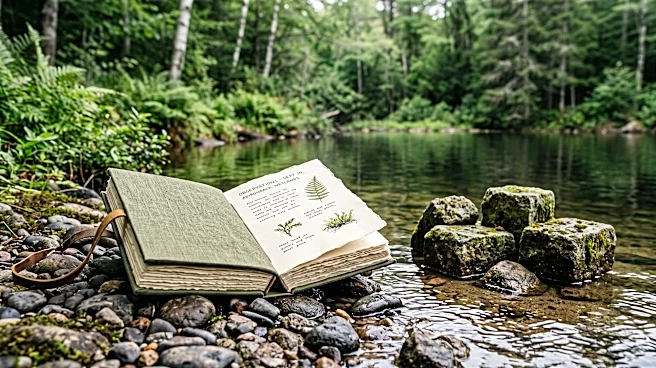
Dr. Curt Stager, a resident of Moody Pond in the Adirondacks, is meticulously documenting local environmental changes through nature journals, observing shifts in weather patterns and ecosystems. His observations, which began in 2019, include tracking
turtle behavior on a log and monitoring pond water levels using a series of marker bricks. Stager notes that long-term records, such as those showing annual snowfall in Old Forge since the 1970s, reveal significant changes, including a substantial decrease in snowfall. He emphasizes the scientific value of these local, consistent observations, particularly for understanding how plants and animals respond to climate change, and how these changes can lead to ecological mismatches where interdependent species fall out of synchrony.
Why It's Important?
Dr. Stager's work highlights the critical importance of local-level data collection in understanding the broader impacts of climate change. While official weather stations provide macro-level data, detailed observations of specific flora and fauna, like turtle behavior or pond levels, offer unique insights into ecosystem responses. This localized data can reveal subtle yet significant shifts that might be missed by larger-scale monitoring. For communities in the Adirondacks, understanding these changes is vital, as altered weather patterns directly affect local economies, such as the snowmobile industry in Old Forge, and the overall ecological health of the region. Stager's efforts underscore that citizen science and consistent personal record-keeping can contribute valuable scientific data, informing both local adaptation strategies and broader climate research.
What's Next?
Dr. Stager plans to continue his detailed nature journaling, contributing to a growing body of long-term local environmental data. His work, alongside similar initiatives, could inspire more individuals and communities to engage in citizen science, systematically documenting changes in their local environments. The data collected from these nature diaries will likely be used in further scientific studies, potentially leading to peer-reviewed publications that highlight regional climate impacts. This ongoing documentation will provide crucial evidence for policymakers and local stakeholders to develop informed strategies for climate adaptation and conservation efforts in the Adirondacks and similar regions affected by environmental shifts.
Beyond the Headlines
Dr. Stager's practice of nature journaling extends beyond scientific data collection; it fosters a deeper connection between individuals and their local environment. This personal engagement can cultivate a heightened awareness of ecological processes and the subtle impacts of climate change, transforming abstract global issues into tangible local realities. The concept of "hunger stones" adapted for Moody Pond, for instance, provides a historical and cultural resonance to modern environmental monitoring. Ethically, this work emphasizes the responsibility of individuals to observe and protect their natural surroundings. Culturally, it promotes a return to direct observation and appreciation of nature, contrasting with an increasingly digital world, and encourages a sense of stewardship for local ecosystems. This approach could lead to a more engaged and informed citizenry, better equipped to advocate for environmental protection.