





What's Happening?
The ongoing conflict in Sudan between the Sudanese Armed Forces (SAF) and the paramilitary Rapid Support Forces (RSF) has led to a severe hunger crisis, with over 40% of the population struggling to access sufficient food. According to the United Nations-backed
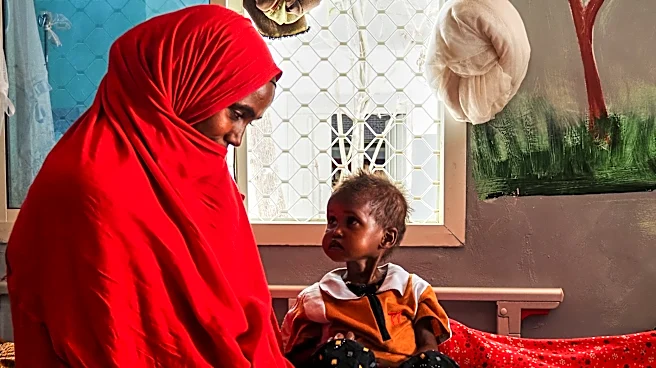
Integrated Food Security Phase Classification (IPC), approximately 135,000 people are facing catastrophic levels of hunger, particularly in North Darfur, South Darfur, and South Kordofan. The situation is exacerbated by drone attacks, limited humanitarian access, and the impending rainy season, which traditionally brings food shortages. The conflict has also severely impacted Sudan's health system, with many hospitals and clinics destroyed or non-functional. Aid agencies report that families are resorting to extreme measures for survival, such as eating leaves and animal feed.
Why It's Important?
The deepening hunger crisis in Sudan highlights the severe humanitarian impact of prolonged conflict. With nearly 20 million people affected, the crisis poses significant challenges for international aid organizations and underscores the need for urgent global attention. The situation is particularly dire for children, with an estimated 825,000 under the age of five at risk of severe acute malnutrition by 2026. The conflict's impact on Sudan's health infrastructure further complicates relief efforts. Additionally, geopolitical tensions affecting supply routes, such as those around the Strait of Hormuz, could further destabilize Sudan's food supply chain, increasing the urgency for international intervention and support.
What's Next?
As Sudan enters its rainy season, the situation is expected to worsen, with heavy rains likely to disrupt aid deliveries and exacerbate food shortages. Humanitarian organizations are calling for increased international attention and support to address the crisis. The reliance on imports from Gulf countries, coupled with geopolitical tensions, suggests that supply chain disruptions could continue to impact food and fuel availability. The international community may need to prioritize diplomatic efforts to stabilize the region and ensure the safe delivery of humanitarian aid.